
A clinical trial finds that daraxonrasib combined with chemotherapy produces encouraging results against metastatic pancreatic cancer, although larger studies are needed to confirm its benefits.
A new treatment combining the cancer drug daraxonrasib with chemotherapy has produced encouraging results in patients with advanced pancreatic cancer. In an early-stage clinical trial, tumors shrank or disappeared in nearly 61% of patients, while approximately 8% experienced complete responses in which their cancer was no longer detectable on imaging. Researchers presented the findings November 20, 2026, at an international cancer conference in Barcelona, Spain.
The study involved 61 patients whose pancreatic cancer had spread to other parts of their bodies. After receiving the combination treatment, participants experienced a median of 12.8 months before their disease worsened or they died. That result compares favorably with historical chemotherapy outcomes, although the study did not directly compare the new treatment with chemotherapy alone.
The findings offer another potential treatment option for a disease that remains exceptionally difficult to control. Scientists believe daraxonrasib could become an important addition to existing therapies, but they caution that larger randomized trials must establish whether the combination extends patients’ lives.
Clinical Trial Shows Encouraging Tumor Responses
The results came from a phase 1/2 clinical trial known as RMC-GI-102, which evaluated daraxonrasib alongside two established chemotherapy medications. Participants received the experimental combination as their first treatment for metastatic pancreatic cancer, rather than waiting until chemotherapy stopped working.
Researchers reported an objective response rate of 60.7%, meaning that nearly two-thirds of participants experienced measurable tumor shrinkage or disappearance. Five patients, representing 8.2% of the study population, experienced complete responses, with no detectable cancer on their imaging assessments. However, a complete response does not necessarily mean every cancer cell has been eliminated or that the disease cannot return.
The disease control rate reached 90.2%, including patients whose tumors shrank and those whose cancer remained stable without measurable progression. The median duration of response was 11.1 months, while median progression-free survival reached 12.8 months. At the one-year mark, an estimated 76.6% of participants were alive.
Dr. Wungki Park, a gastrointestinal medical oncologist at Memorial Sloan Kettering Cancer Center in New York, presented the findings at the EORTC-NCI-AACR Symposium on Molecular Targets and Cancer Therapeutics. He described the combination as promising because of both the depth of tumor responses and the length of disease control.
How Daraxonrasib Targets Cancer Growth
Daraxonrasib belongs to a newer class of cancer medications designed to interfere with RAS proteins, which help regulate cell growth and division. Mutations affecting this signaling system occur in more than 90% of pancreatic cancers, making it an important target for researchers developing new treatments.
Normally, RAS proteins act like switches that help cells determine when to grow. Cancer-related mutations can keep these switches active, sending repeated signals that encourage uncontrolled cell division. Daraxonrasib is designed to block active RAS signaling and interrupt the processes that help cancer cells survive.
The drug is taken orally, while the chemotherapy medications gemcitabine and nab-paclitaxel are administered intravenously. In the combination trial, patients received 200 milligrams of daraxonrasib daily, alongside chemotherapy on scheduled treatment days.
Combining medications that attack cancer through different mechanisms could potentially improve treatment responses. Researchers also hope that combination therapy might delay resistance, which develops when cancer cells adapt and stop responding to treatment. Whether this approach produces longer survival than chemotherapy alone remains under investigation.
FDA Approved the Drug in August
Daraxonrasib, sold under the brand name Rasonque, received approval from the U.S. Food and Drug Administration on August 26, 2026. The approval was based on a separate phase 3 study involving 500 patients with metastatic pancreatic cancer whose disease had progressed after an earlier treatment.
That study compared daraxonrasib alone with standard chemotherapy. Patients receiving the targeted medication had a median overall survival of 13.2 months, compared with 6.7 months among patients receiving chemotherapy. Median progression-free survival was 7.2 months with daraxonrasib and 3.6 months with chemotherapy.
Those results established the drug as a new treatment option for certain adults with metastatic pancreatic adenocarcinoma. The FDA approval covers patients who have received at least one prior systemic therapy or who are not suitable candidates for combinations of multiple systemic medications.
The newly reported trial addresses a different question: whether adding daraxonrasib to chemotherapy can improve outcomes when treatment begins. Although the medication itself is already approved for specified patients, the particular first-line combination studied in Barcelona has not received FDA approval for that use.
Side Effects Remain an Important Consideration
Researchers reported that the combination treatment was generally manageable, although patients experienced side effects associated with both daraxonrasib and chemotherapy. The most common problems included skin rashes, diarrhea, fatigue and reductions in certain blood cells. Approximately 5% of participants discontinued treatment because of side effects attributed to daraxonrasib.
The FDA also identifies potentially serious risks associated with the medication, including gastrointestinal perforation, inflammatory lung disease and severe skin or soft-tissue reactions. These warnings mean treatment requires careful medical supervision, particularly for patients whose health has already been weakened by advanced cancer.
The study’s limited size is another important consideration. With only 61 participants and no separate chemotherapy-only comparison group, researchers cannot determine exactly how much additional benefit daraxonrasib provided. The results also cannot establish whether the combination is safer or more effective than other available first-line treatments.
A larger phase 3 study, called RASolute 303, is now evaluating daraxonrasib alone and in combination with chemotherapy against chemotherapy alone. The randomized trial is intended to provide stronger evidence about survival, disease progression and treatment safety.
Why Pancreatic Cancer Remains Difficult to Treat
Pancreatic cancer is frequently diagnosed after it has spread because early-stage disease often produces few noticeable symptoms. Once cancer reaches distant organs, surgery generally cannot remove all the disease, leaving medication as the main treatment approach.
Approximately 3% of patients with metastatic pancreatic cancer survive five years after diagnosis. Standard chemotherapy can slow the disease and sometimes shrink tumors, but resistance frequently develops, limiting how long treatment remains effective.
Surgery may still be possible for some patients whose cancer is confined to the pancreas or nearby structures. In selected cases, chemotherapy can shrink tumors enough to make an operation feasible, but this is different from treating cancer that has already spread to distant organs.
Doctors evaluate the location of the tumor, whether blood vessels are involved, the patient’s overall condition and how the disease responds to treatment. A specialist second opinion can help patients understand whether surgery, medication, clinical trials or supportive care best matches their circumstances.
Researchers Prepare for Larger Studies
Scientists are also investigating whether RAS-targeting medications could work against other cancers driven by similar mutations. These include certain lung, colorectal, biliary tract and gynecological cancers. However, effectiveness against pancreatic cancer does not establish that the same treatment will work against those diseases.
Researchers must also determine whether early tumor responses translate into longer survival and improved quality of life. The Barcelona findings provide encouraging evidence, but a treatment that produces substantial tumor shrinkage does not necessarily eliminate the possibility of recurrence.
For patients with metastatic pancreatic cancer, daraxonrasib already offers an FDA-approved treatment option under specific circumstances. The next important question is whether adding it to initial chemotherapy will provide an additional benefit.
The ongoing RASolute 303 trial is designed to answer that question by directly comparing treatment strategies. Until those results become available, the 61-patient study provides promising early evidence rather than definitive proof that the combination is superior to standard first-line chemotherapy.
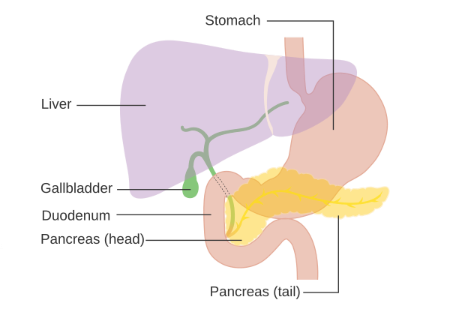
IMAGE: Author Cancer Research UK Permission (Reusing this file) This image has been released as part of an open knowledge project by Cancer Research UK. If re-used, attribute to Cancer Research UK / Wikimedia Commons CC4