
A federal jury found Jonathan Rinderknecht guilty of two arson-related charges in the 2025 Palisades Fire. He faces up to 40 years in prison after his second trial ended with a conviction.
A federal jury in Los Angeles found Jonathan Rinderknecht guilty Friday, November 20, 2026, of starting a brush fire that prosecutors linked to the deadly Palisades Fire. The January 2025 wildfire killed 12 people, destroyed thousands of structures, and devastated communities along the Southern California coast. The verdict came during Rinderknecht’s second trial after an earlier jury failed to reach a unanimous decision.
Rinderknecht, 30, was convicted of destruction of property by means of fire and arson affecting property used in interstate commerce. Both charges were brought in federal court. He faces a mandatory minimum sentence of five years and a maximum of 40 years in prison when sentenced March 17, 2027.
How a Small Fire Became a Disaster
The case centered on the Lachman Fire, which started shortly after midnight on January 1, 2025, near the Summit neighborhood of Pacific Palisades. Firefighters responded and appeared to extinguish the flames. Investigators later determined that the fire had continued burning underground in the roots of dense vegetation.
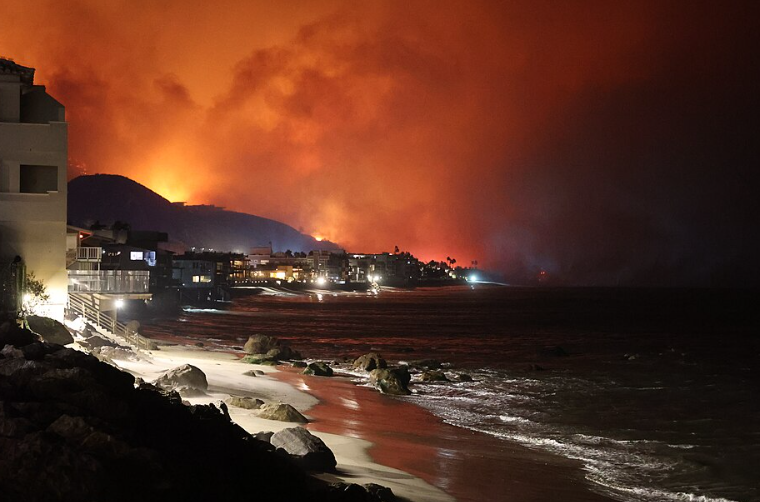
Six days later, powerful Santa Ana winds pushed the remaining heat and embers back to the surface, according to federal prosecutors. The resulting Palisades Fire spread rapidly through neighborhoods in Los Angeles and Malibu. Authorities reported 6,837 structures destroyed and estimated the damage at $25 billion.
Investigators described the blaze as a holdover fire, meaning an earlier fire survived despite appearing to have been extinguished. Establishing that connection was central to the government’s case. Defense attorneys challenged whether investigators had sufficiently proved that the two fires shared the same origin.
Evidence Presented in Court
According to the Justice Department, Rinderknecht had been driving passengers for Uber on New Year’s Eve before returning to an area where he previously lived. He parked near the Skull Rock Trailhead, walked uphill, and recorded videos on his phone. Prosecutors said the Lachman Fire began while he was alone in a clearing on Hidden Buddha Hill.
Cellphone records and location data became important parts of the investigation. Prosecutors said the evidence placed Rinderknecht near the growing flames, contrary to the account he later gave investigators. He attempted several calls to 911 before reaching an operator and reporting the fire.
Investigators also recovered a green barbecue-style lighter from Rinderknecht’s car. Prosecutors said DNA testing linked him to the lighter and argued that it supported their account of how the fire began. The lighter was not recovered at the fire’s origin, and the defense disputed whether it proved that he had started the blaze.
The prosecution also described Rinderknecht as angry and frustrated during the hours leading up to the fire. Witnesses testified about his behavior while driving passengers that night. Prosecutors argued that this evidence helped explain his actions, although the defense rejected the government’s portrayal of his motives.
Defense Challenged the Arson Theory
Defense attorney Steve Haney maintained that the government had not proved Rinderknecht deliberately started the Lachman Fire. The defense emphasized that Rinderknecht reported the flames to emergency services and questioned the interpretation of the physical evidence. It also challenged the claim that the January 1 fire caused the January 7 disaster.
The defense had raised the possibility of fireworks as another explanation for the initial fire. Its arguments focused on reasonable doubt about both the ignition source and the connection between the blazes. The jury ultimately accepted the prosecution’s case and returned guilty verdicts on both charges.
Rinderknecht’s first trial ended in a mistrial on June 26, 2026. That jury was divided, with 10 members favoring acquittal and two favoring conviction. Prosecutors subsequently brought a revised, two-count indictment and proceeded with another trial in November.
The second trial included approximately two weeks of testimony. Jurors began deliberating on November 18 and announced their verdict on November 20. The different outcomes in the two trials reflected the decisions of separate juries considering the evidence presented to them.
Families and Officials Respond
The conviction brought a major development for residents whose neighborhoods were destroyed and for families who lost loved ones. However, a criminal verdict does not restore homes or resolve the continuing difficulties of rebuilding. Many displaced residents have faced a lengthy recovery process since the disaster.
Los Angeles City Councilwoman Traci Park said the verdict could not undo the losses suffered by the community. She noted that thousands of people remained displaced nearly two years after the fire. Her response emphasized that recovery efforts would continue beyond the criminal proceedings.
Federal prosecutors welcomed the verdict after their unsuccessful first trial. First Assistant U.S. Attorney Bill Essayli credited investigators and prosecutors for continuing the case. The Bureau of Alcohol, Tobacco, Firearms and Explosives investigated with assistance from the Los Angeles Police Department and the U.S. Forest Service.
Sentencing Scheduled for March 2027
Rinderknecht has remained in federal custody since October 2025. U.S. District Judge Anne Hwang will preside over his sentencing hearing, scheduled for March 17, 2027. The judge will determine his punishment within the applicable federal sentencing rules and statutory limits.
The conviction resolves the criminal trial over who deliberately ignited the original Lachman Fire. Questions about rebuilding, financial recovery, and the broader consequences of the Palisades Fire remain for affected communities. For now, the next scheduled step in the federal case is Rinderknecht’s sentencing hearing.
IMAGE: Palisades Fire Source Palisades Fire Author CAL FIRE_Official CC0