
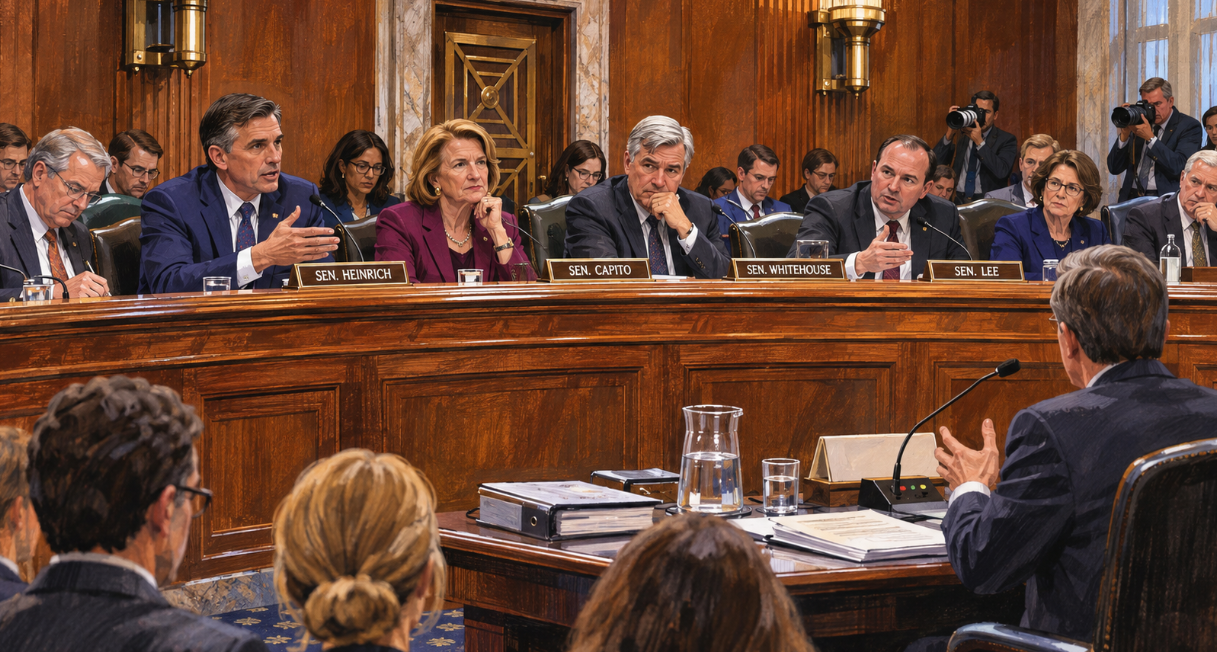
The Senate approved a sweeping energy permitting overhaul in a 62–33 vote on November 19, 2026. Supporters say it could accelerate construction and help control electricity costs, while opponents warn it would weaken environmental protections. The measure now faces an uncertain future in the House.
The U.S. Senate approved a sweeping bipartisan energy infrastructure bill Thursday, November 19, 2026, advancing legislation intended to accelerate construction of power plants, transmission lines, pipelines, and other major projects. The measure passed 62-33 after negotiations between Republican and Democratic lawmakers. Supporters say faster federal approvals could help increase electricity supplies and address rising energy costs.
The legislation, called the Bipartisan American Affordability and Jobs Act of 2026, also addresses the growing electricity demands of artificial intelligence data centers. It would change how federal agencies review projects and how certain decisions can be challenged in court. The bill now moves to the House of Representatives, where its final prospects remain uncertain.
Bipartisan Coalition Pushes Energy Permitting Reform
The bill was developed by four senators who lead major committees overseeing energy and environmental policy. Republicans Shelley Moore Capito of West Virginia and Mike Lee of Utah worked with Democrats Sheldon Whitehouse of Rhode Island and Martin Heinrich of New Mexico. Their negotiations sought to balance faster infrastructure development with protections for different energy industries.
Fifteen Democrats and senators who caucus with Democrats supported the measure, including Senate Minority Leader Chuck Schumer. Most Republicans also voted in favor, although Josh Hawley of Missouri and Mike Rounds of South Dakota opposed it. The vote revealed divisions within both parties over energy costs, environmental safeguards, and the federal government’s role in approving construction.
The legislation follows the November midterm elections, which shifted political power toward Democrats. Some lawmakers wanted Congress to act before the next session begins in January. Others argued that the incoming Congress should have an opportunity to negotiate different legislation.
What the Energy Bill Would Change
Federal permitting requirements can affect projects ranging from electrical transmission lines to natural gas facilities. Developers often need approvals from multiple agencies before construction can begin. Supporters argue that complicated reviews, lawsuits, and overlapping requirements can delay projects for years.
The Senate bill would establish new procedures and deadlines for certain federal reviews. It would also change how agencies assess environmental impacts and when previously issued permits can be revoked. Supporters say developers need greater certainty before investing billions of dollars in large construction projects.
Several existing laws would be affected, including the National Environmental Policy Act, Clean Water Act, and Endangered Species Act. The changes also reach laws governing historic preservation and federal electricity regulation. Their effects would depend on the types of projects involved and the final rules adopted by federal agencies.
The National Environmental Policy Act requires federal agencies to evaluate environmental consequences before making major decisions. It also provides opportunities for public participation in reviewing proposed projects. Critics fear the legislation would restrict those opportunities and make legal challenges more difficult.
Data Centers and Rising Electricity Prices
Rapid expansion of artificial intelligence has increased demand for electricity from large data centers. These facilities require substantial power to operate servers, cooling equipment, and other infrastructure. Utilities must consider that additional demand when planning transmission networks and new generating capacity.
The Senate bill includes provisions intended to make large electricity customers bear more responsibility for infrastructure costs associated with their operations. Supporters argue that ordinary households should not have to subsidize expensive upgrades primarily benefiting technology companies. They say clearer requirements could help protect customers from some increases in electricity bills.
However, passing the bill would not automatically reduce electricity prices. Consumer rates depend on fuel costs, utility investments, regulatory decisions, and regional supply conditions. Additional electricity generation and transmission capacity could relieve some pressures, but the financial effects would vary across the country.
Environmental Groups Warn of Weaker Protections
Major environmental organizations oppose the legislation despite provisions intended to accelerate renewable energy development. Groups including the Sierra Club, National Wildlife Federation, and Environmental Integrity Project warn that faster approvals could also encourage more fossil fuel infrastructure. They are particularly concerned about reduced opportunities for communities to challenge harmful projects.
Jen Duggan, executive director of the Environmental Integrity Project, criticized the proposal as disproportionately benefiting major polluters. She warned that the legislation could accelerate construction of gas-fired power plants, oil and gas pipelines, and liquefied natural gas facilities. Her organization also objected to advancing extensive changes to environmental law without a more thorough public hearing process.
Opponents argue that environmental reviews provide important safeguards for drinking water, wildlife habitats, and nearby communities. They say the legislation could limit federal oversight and weaken protections developed over several decades. Tribal organizations have also raised concerns about consultation requirements, historic sites, and tribal sovereignty.
Supporters reject the argument that faster permitting necessarily means abandoning environmental protections. They contend that unnecessary delays affect both fossil fuel projects and cleaner technologies. Their position is that federal agencies can evaluate environmental impacts while reaching decisions more quickly.
Clean Energy Industry Sees Potential Benefits
Renewable energy developers are among the industries supporting permitting changes. Wind farms, solar installations, and transmission lines frequently require extensive federal, state, and local approvals. Delays can increase project costs and prevent new electricity supplies from reaching customers.
The American Clean Power Association has welcomed efforts to modernize the approval process. Supporters argue that additional transmission infrastructure is particularly important because renewable energy projects are often located far from population centers. New power lines could connect those facilities to communities experiencing growing electricity demand.
Traditional energy companies also support the legislation. Oil and gas industry representatives say clearer permitting procedures would improve investment conditions for pipelines and production facilities. That combination of industry support has become one of the bill’s central political strengths and sources of controversy.
Researchers disagree about the likely effects on greenhouse gas emissions. Faster transmission construction could allow more renewable electricity to reach the grid, while easier approvals for fossil fuel infrastructure could prolong reliance on oil and natural gas. The ultimate balance would depend on which projects move forward and how much energy they produce.
Oregon Senators Challenge the Final Package
Democratic Senators Jeff Merkley and Ron Wyden of Oregon opposed moving forward without changes they considered essential. Their proposals included restrictions on data centers located on public lands and measures addressing federal interference with clean energy projects. They also questioned whether lawmakers had sufficient time to evaluate the legislation.
Merkley argued that expanding renewable energy would not adequately address climate change if the bill simultaneously encouraged additional fossil fuel development. He urged colleagues to consider stronger environmental protections rather than approving the package unchanged. His position reflected wider disagreements among Democrats about the appropriate balance between infrastructure development and climate policy.
The dispute over amendments complicated negotiations during the final hours before the vote. A proposed agreement would have allowed consideration of numerous amendments, but senators could not reach unanimous consent on the process. The chamber ultimately approved the legislation without adopting that additional package.
House Faces a Difficult Decision
The Senate’s approval does not make the proposal law. The House previously approved a narrower permitting measure, meaning representatives must now consider the Senate’s broader approach. The two chambers would need to agree on identical legislation before sending it to President Donald Trump.
Trump has endorsed the effort, arguing that faster approvals would strengthen American energy production and reduce costs. However, some House Republicans have expressed concerns about provisions benefiting renewable energy developers. Democrats remain divided over whether the environmental compromises are acceptable.
The bill’s supporters believe the agreement offers a rare opportunity to address construction delays across multiple industries. Opponents maintain that lawmakers should negotiate stronger safeguards when the new Congress convenes in January. Neither position guarantees the outcome of the upcoming House debate.
For now, the measure represents one of Congress’s most significant recent attempts to overhaul federal energy permitting. The House must determine whether to accept the Senate’s version, negotiate changes, or leave the issue for the next Congress. Until both chambers approve the same legislation and the president signs it, the proposed permitting changes will not take effect.
IMAGE: DNR Art Department