
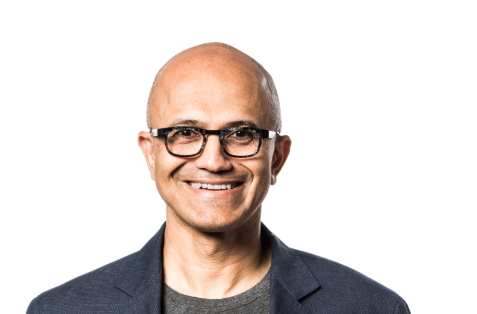
Microsoft’s chief executive says the voluntary exit program is part of a major shift toward artificial intelligence, with employees increasingly expected to manage AI tools rather than perform every task themselves.
Microsoft CEO Satya Nadella has explained why the company offered voluntary buyouts to approximately 60,000 employees in October 2026, linking the decision to a broad reorganization around artificial intelligence. Speaking at the DealBook Summit on November 18, Nadella said Microsoft wants employees to use AI tools throughout their work rather than simply replace entire professions with automated systems. He described the program as a way for workers to choose whether to remain with the company during a major transition.
The offers did not mean 60,000 employees were fired or that all eligible workers agreed to leave. Microsoft made the program available to roughly 27% of its global workforce, giving qualifying employees the option of departing with financial support. The company has not disclosed a final participation total in the reports reviewed.
Nadella Explains the Voluntary Exit Offer
During his conversation with journalist Andrew Ross Sorkin, Nadella said the buyout program was intended to give employees greater control over career decisions. He argued that major changes to how people work can be difficult, particularly when those changes involve technologies whose effects remain uncertain. Microsoft, he said, must reorganize its teams and processes to work more effectively with AI.
The distinction matters because a voluntary buyout differs from a conventional layoff. Eligible employees can decide whether to accept an exit package, while workers affected by layoffs generally do not have that choice. However, an offer of voluntary departure can still create uncertainty about future staffing levels and expectations for those who stay.
Nadella acknowledged that a company founded more than five decades ago faces challenges becoming an AI-first organization. Its existing operations, employee roles and established procedures were developed long before the current generation of AI tools. Restructuring those systems, he suggested, will require more time than many observers expect.
What Microsoft Offered Employees
Microsoft announced the Voluntary Exit Offer on October 26 through a message from Chief People Officer Amy Coleman. The program was available to eligible workers at level 70 and below in participating organizations across the United States, Canada, Britain and India. Not every division or employee qualified for the offer.
The company said participants could leave with financial support and career-planning resources, although terms depended on individual eligibility. Microsoft described the arrangement as time-limited and voluntary. It also said the initiative would help participating business units adjust their workforces to changing needs.
In her announcement, Coleman described the program as an additional option for employees already considering careers outside Microsoft. She also emphasized continued training, opportunities to move internally and efforts to help employees develop new skills. Those commitments do not establish how many workers will ultimately remain, depart or move into different positions.
Microsoft employed approximately 223,000 people worldwide at the end of June 2026. A group of 60,000 potential recipients therefore represented more than a quarter of its workforce. The size of the offer attracted attention even though the number eligible was not the number who accepted.
How Artificial Intelligence Changes Software Engineering
Nadella challenged the idea that increasingly capable coding systems will make software engineers unnecessary. He said views of AI-assisted programming have shifted from skepticism about whether machines could write useful code to predictions that engineers themselves might become obsolete. His current position is that software development will continue, but engineering teams will work differently.
As an example, he pointed to the 11 developers working on Cowork, an AI agent associated with Microsoft 365 applications. Nadella said the team uses AI extensively to build and maintain the systems responsible for producing its software. His example described developers directing tools and supervising processes rather than performing every technical task manually.
That model could change what companies expect from programmers. Engineers may spend more time specifying requirements, evaluating generated code, checking security and reliability, and deciding whether automated results meet product goals. Such responsibilities still require technical judgment, even when an AI tool handles portions of the implementation.
The Cowork example, however, does not establish that every software product can be created with an 11-person team. Product complexity, security requirements and ongoing maintenance vary widely. Nadella presented the team as an illustration of a different approach to development, not as a confirmed staffing formula for all of Microsoft.
Workers Face an Uncertain Transition
In a separate discussion with Gergely Orosz on *The Pragmatic Engineer* podcast, Nadella addressed the anxiety surrounding AI and employment. He said public debate about machines replacing people had left some workers feeling they had limited control over their professional futures. He also criticized sweeping predictions that AI would eliminate all jobs.
His comments reflected a tension in Microsoft’s strategy. Management says it expects employees to gain new abilities and work more closely with AI systems, yet it is simultaneously offering a large group of employees support to leave. Workers who stay may face changes in responsibilities, team organization and the skills their jobs require.
Microsoft has already undergone other workforce changes in 2026. Earlier in the year, it offered voluntary retirement packages to some employees, and in July it announced approximately 4,800 job cuts. The October program was separate from those layoffs, although all occurred during a period of substantial investment in AI infrastructure.
Microsoft’s AI Spending Adds Financial Pressure
Microsoft’s workforce changes come as the company commits large sums to data centers, specialized processors and other equipment supporting AI services. Reuters reported in October that the company had forecast approximately $175 billion in capital expenditure during calendar 2026. That spending has prompted questions from investors about how quickly AI investments can generate sufficient returns.
AI is also becoming central to products such as Microsoft 365, Windows and the company’s cloud services. For employees, the shift involves more than learning to operate a chatbot. Microsoft’s stated direction is toward integrating AI agents into routine tasks, software development and business processes across the organization.
Nadella has not said that human workers will stop being important to Microsoft. Instead, he envisions employees increasingly supervising intelligent tools, making decisions and directing work carried out partly by AI systems. Whether that approach leads to more productive teams, fewer positions or a different mix of jobs remains unsettled.
For now, the verified development is an offer, not a departure count. Microsoft’s next challenge is to show how its AI-centered organization will function in practice while eligible employees decide whether to accept the voluntary exit program.
IMAGE: Microsoft CEO Satya Nadella Source Satya Nadella Microsoft leadership profile page Author Brian Smale and Microsoft CC4