
A telecommunications failure halted departures across the United States for nearly five hours on November 13. Airlines are restoring schedules as federal investigators examine router problems and Congress debates funding to modernize the nation’s air traffic control system.
Air travel across the United States was moving toward normal operations Sunday, November 15, after a nationwide ground stop disrupted thousands of flights and stranded travelers for much of the weekend. Federal officials said the country’s air traffic control system was stable, although airlines continued dealing with cancellations and delays caused by Friday’s shutdown.
The Federal Aviation Administration ordered the ground stop on November 13 after telecommunications problems affected radar feeds and communications used by air traffic controllers. The stoppage lasted more than four hours, making it the longest nationwide halt of its kind in 25 years.
By Sunday, attention had shifted from restoring flights to determining what caused the failure. The incident also renewed a dispute in Washington over how much money Congress should provide to modernize the nation’s aging air traffic control infrastructure.
Flight Cancellations Decline as Airlines Recover
The disruption began Friday afternoon and continued affecting airline schedules throughout the weekend. Aircraft, flight crews and passengers were left in the wrong locations, creating scheduling problems that could not be resolved immediately after the ground stop ended.
More than 6,600 flights were canceled Saturday, according to FlightAware. The number had fallen considerably by Sunday, although cancellations continued accumulating throughout the day.
Reuters reported approximately 2,100 cancellations and 9,400 delays by Sunday evening. That represented an improvement from Saturday but showed that the airline industry had not fully recovered.
Transportation Secretary Sean Duffy said he expected airlines to return to full operating capacity by Monday. He explained that airlines needed time to reposition aircraft and crews after the nationwide interruption.
The problem was especially difficult because airlines operate tightly coordinated schedules. One aircraft may serve several cities during a single day, while pilots and flight attendants must comply with federal working-hour limits.
When a flight is canceled, the disruption can affect several subsequent flights. Airlines must find available crews, reposition aircraft and accommodate passengers whose original travel plans have changed.
What Caused the Nationwide Ground Stop?
The FAA said the trouble began around 3:30 p.m. Eastern Time on Friday, when its telecommunications network experienced unusual activity.
Investigators discovered that the system was receiving roughly 1,000 connection attempts every four to five seconds. The excessive traffic destabilized equipment responsible for carrying communications and radar information between air traffic control facilities.
The problem developed during routine telecommunications maintenance involving contractor L3Harris.
Workers had been replacing older copper communication lines with modern fiber-optic connections. As part of that work, a new router had been installed at a communications facility in El Dorado, Arkansas.
Investigators also identified unusual network activity associated with a radar facility in Amarillo, Texas.
According to the FAA, technicians isolated both locations and disabled certain router functions. Those measures stabilized the network and allowed officials to begin restoring normal flight operations.
The agency also disabled the same broadcasting function on approximately 60 similar routers as a precaution.
Although the equipment involved has been identified, investigators have not determined whether a defective router, configuration problem or another technical issue caused the failure.
The FAA said there was no evidence indicating that a cyberattack or deliberate interference was responsible.
FAA Says Passenger Safety Was Maintained
Federal officials emphasized that the telecommunications failure did not mean controllers completely lost the ability to communicate with aircraft.
Some radio frequencies and radar systems continued operating throughout the incident. Controllers used established safety procedures to manage aircraft already in the air.
The FAA reported instability at 17 of its 22 Air Route Traffic Control Centers, with problems also affecting several facilities responsible for managing aircraft approaching and departing airports.
The agency ordered the ground stop to prevent additional aircraft from entering a system experiencing unreliable communications.
Flights already airborne were allowed to continue under appropriate safety procedures. The FAA said all aircraft landed safely.
The ground stop ended around 8:15 p.m. Eastern Time Friday after technicians confirmed that the network had stabilized.
Officials said passengers could safely continue traveling once flights resumed. However, restoring the air traffic control network did not immediately resolve the problems airlines faced with their schedules.
Aging Technology Raises New Concerns
The disruption exposed vulnerabilities in a system that includes technology developed decades ago.
Some FAA telecommunications equipment relies on infrastructure dating back to the 1980s. Other components have remained in service long after manufacturers stopped supporting them.
A 2024 Government Accountability Office review found that 51 of the FAA’s 138 information systems were considered unsustainable. The problems included outdated functionality, limited replacement parts and difficulties maintaining aging equipment.
Modernization projects have been underway for years, but replacing critical aviation technology is particularly complicated.
Unlike many computer networks, the air traffic control system cannot simply be shut down for routine upgrades. Equipment must often be replaced while other parts of the network continue operating.
That creates additional risks during transitions from older systems to newer technology.
The November 13 incident appears to have occurred during exactly that type of transition.
Transportation officials acknowledged that they would reconsider when certain maintenance work should be performed. Routine upgrades at remote facilities had generally been considered safe to conduct during normal operating hours.
Billions Already Approved for Modernization
Congress approved $12.5 billion in 2025 for the first phase of a major FAA modernization program.
The funding supports replacement of outdated communications equipment, radar systems, radios and other technology used to manage aircraft.
The Transportation Department reported that approximately 70 percent of planned copper-to-fiber telecommunications conversions had been completed.
Officials also reported installing new surface-awareness technology at 143 control towers and converting radio equipment at 469 locations.
Other improvements include electronic flight information systems and upgraded voice communications equipment.
The first phase of the modernization program is scheduled for completion by the end of 2028.
Duffy said the approved money has already been allocated to specific projects, even though much of it has not yet been paid to contractors.
He argued that the funding does not cover every component needed to replace the nation’s aging air traffic control network.
Trump Administration Seeks Another $50 Billion
President Donald Trump called for additional congressional funding Sunday, arguing that the United States needs a modern air traffic control system capable of preventing similar disruptions.
Trump criticized the previous Biden administration over the pace of aviation infrastructure improvements and called on lawmakers to support a major investment.
Transportation Secretary Duffy is seeking approximately $50 billion in additional funding.
He said the money would support replacement telecommunications networks, software and other systems that were not fully covered by the previous appropriation.
Democratic lawmakers questioned the size of the request and asked why the administration needs substantially more funding before completing projects already approved.
Representatives Rick Larsen and André Carson requested explanations about existing expenditures. Representative Rosa DeLauro also called for greater transparency in how the Transportation Department manages modernization projects.
The debate involves more than whether the system needs improvement. Both parties have acknowledged problems with aging aviation technology.
The disagreement centers on the cost of completing the work, the speed of implementation and congressional oversight of federal spending.
Duffy said the administration intends to provide lawmakers with a more detailed explanation of its additional funding request.
Investigation Could Lead to Further Oversight
The FAA and L3Harris are continuing to investigate the technical failure. Engineers are examining the affected routers and the network activity that overwhelmed older equipment.
The investigation must determine whether the problem resulted from faulty hardware, improper configuration or an unexpected interaction between different generations of telecommunications technology.
Those findings will be important because the FAA is replacing equipment throughout a nationwide network.
A problem discovered at one location could have implications for similar installations elsewhere.
Lawmakers are also expected to examine whether the FAA adequately assessed the risks involved in performing upgrades while the system remained operational.
The Government Accountability Office has previously warned that aviation modernization projects face challenges involving cost estimates, schedules and technical planning.
Congressional oversight could therefore address both the immediate failure and the broader management of the modernization program.
What Travelers Should Expect
Federal officials expect airline schedules to approach normal operations Monday, November 16, although individual flights may still experience delays or cancellations.
Passengers should check directly with their airlines before traveling to the airport. Flight schedules may continue changing as carriers reposition crews and aircraft.
Travelers whose flights were canceled can also review their airline’s rebooking and refund options.
For the FAA, the immediate emergency has ended, but the investigation is continuing.
The agency must determine what caused the communications failure while continuing a modernization effort intended to prevent future disruptions.
The next major developments will be the investigation’s technical findings and the administration’s detailed funding request to Congress. Both could influence how quickly the United States replaces the aging systems responsible for managing one of the world’s busiest aviation networks.
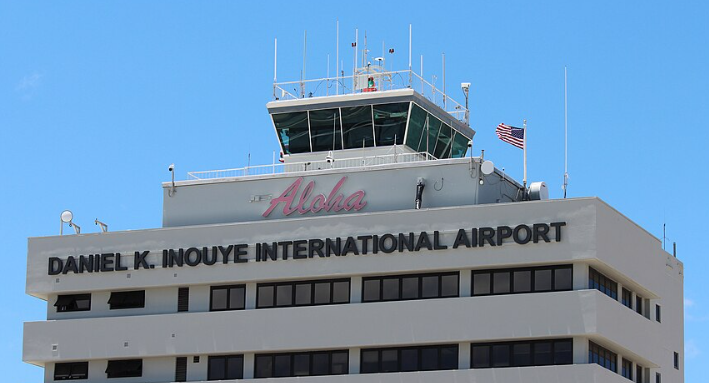
IMAGE: Source Own work Author Michael Voss CC1