
A rare nationwide flight shutdown on November 13, 2026, causes widespread cancellations at Chicago O’Hare, Midway and airports across the United States, renewing concerns about outdated air traffic control equipment.
The Federal Aviation Administration lifted a nationwide ground stop Friday evening, November 13, 2026, after a communications outage disrupted air traffic control operations across the United States. The shutdown prevented most departing flights from taking off for more than four hours, causing thousands of cancellations and delays. Chicago’s O’Hare and Midway airports were among the major transportation hubs affected.
The restrictions ended at approximately 8:15 p.m. Eastern time, but airlines warned that disruptions could continue into the weekend. Transportation Secretary Sean Duffy said older communications equipment had become overloaded, interfering with the systems controllers use to manage aircraft. Federal officials reported no evidence of a cyberattack.
Chicago Airports Face Major Delays and Cancellations
Travelers at O’Hare International Airport and Midway International Airport encountered widespread delays as the FAA suspended departures Friday afternoon. Passengers crowded terminals, searched flight information boards and contacted airlines for updates.
According to NBC Chicago, the Chicago Department of Aviation reported 213 delayed flights at O’Hare and another 55 at Midway by 3:11 p.m. Central time. Those figures were recorded early in the disruption and did not represent the final number of affected flights.
The FAA had already issued separate ground stops for both airports before expanding its restrictions nationwide. Aviation officials initially described the local interruptions as equipment-related problems.
Some travelers learned about the shutdown while passing through airport security. Others were already waiting to board aircraft or had settled into their seats before departure plans changed.
At O’Hare, passengers faced difficult decisions about whether to remain at the airport or arrange overnight accommodations. Rebooking flights became increasingly challenging as airlines canceled departures and customer service lines grew longer.
The effects extended beyond travelers beginning their journeys in Chicago. Passengers connecting through O’Hare and Midway also faced delays, potentially affecting flights to destinations across the country.
Communications Failure Forces Nationwide Shutdown
The FAA announced that communications problems were affecting multiple Air Route Traffic Control Centers. These facilities coordinate aircraft movements between airports and help maintain safe distances between planes.
Duffy said instability developed around 3:36 p.m. Eastern time, affecting radar information and communications between air traffic control facilities. Controllers were receiving inconsistent information, creating uncertainty about their ability to manage the national airspace safely.
The government responded by ordering most departing aircraft to remain on the ground. Flights already airborne were generally permitted to continue, while some international departures and flights operating within Alaska and Hawaii received exceptions.
More than 3,500 aircraft were in the air when the restrictions began, according to Duffy. Federal aviation officials continued coordinating their movements while technicians investigated the equipment failure.
The nationwide order was precautionary rather than a response to an aircraft accident. Officials said maintaining reliable communication was essential to preventing dangerous situations.
The FAA eventually restored the affected systems and conducted safety checks before allowing departures to resume. However, reopening the airspace did not immediately return airlines to their normal operating schedules.
Aging Equipment Blamed for the Failure
During a White House briefing Friday evening, Duffy attributed the disruption to older communications systems that struggled to handle information from newer equipment. He described the country’s air traffic control infrastructure as a mixture of outdated technology and modern systems.
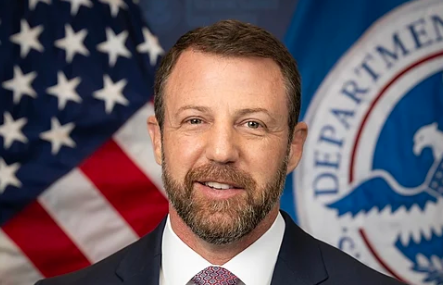
Homeland Security Secretary Markwayne Mullin offered a similar explanation, saying newly introduced equipment appeared to have overwhelmed older components. Investigators were still examining exactly how the failure developed.
Mullin said authorities had found no evidence suggesting terrorism, sabotage or a cyberattack. The available information pointed toward a technical problem rather than deliberate interference.
Officials also addressed speculation involving the FAA’s new artificial intelligence technology. Duffy said the SMART system, designed to provide decision-support information for controllers, was not connected to the equipment involved in Friday’s outage.
That distinction was important because the FAA has been introducing newer technology while replacing aging infrastructure. Officials maintained that the failure involved older components rather than the new artificial intelligence system.
The government has not released a complete technical investigation identifying every contributing factor. Further examination will be needed to determine why the problem spread across multiple facilities and how similar disruptions can be prevented.
Thousands of Flights Canceled Nationwide
The shutdown caused extensive disruption throughout the country’s airline network. By Friday evening, nearly 5,000 flights had been canceled, according to figures reported by ABC News from flight-tracking service FlightAware.
Hundreds of additional cancellations were already recorded for Saturday. Airlines also experienced thousands of delays as aircraft remained at gates or waited for permission to depart.
United Airlines announced that it would cancel most of its remaining Friday flights, allowing limited exceptions for some international services. JetBlue canceled its remaining departures except for certain Europe-bound flights from New York and Boston.
Air Canada also suspended its remaining Friday flights between Canada and the United States. The restrictions created problems for travelers whose journeys involved multiple airlines or international connections.
Some aircraft already in flight were diverted to other airports, leaving passengers far from their intended destinations. Others returned to their departure airports after receiving updated instructions.
The Associated Press reported that aviation analytics company Cirium had recorded at least 827 diverted flights by early Friday evening. Of those, 670 returned to their original airports, while 157 landed elsewhere.
These diversions added to the logistical problems facing airlines. Aircraft and flight crews were no longer positioned where they were needed for later departures.
Passengers Face Uncertainty as Flights Resume
Even after the ground stop ended, travelers continued dealing with canceled flights and uncertain schedules. Airlines needed to reorganize crews, reposition aircraft and determine which remaining departures could operate.
Many passengers faced difficult choices about whether to remain at airports or find accommodations for the night. Some were traveling for work, while others had planned family visits or weekend events.
At O’Hare, travelers described receiving limited information about their delayed flights. Some considered driving to their destinations, although long distances made that option impractical.
The shutdown also disrupted sporting events and teams traveling for weekend games. Professional basketball, hockey and college football organizations encountered problems arranging charter flights and reaching scheduled destinations.
Duffy said some college teams preparing for Saturday games would receive assistance coordinating their flights. However, the broader recovery depended on airlines restoring their operations throughout the country.
Passengers whose flights were canceled were generally entitled to refunds if they chose not to travel, or could seek rebooking through their airlines. Additional compensation was not automatically required because the disruption originated outside airline operations.
Third Nationwide Ground Stop Since 2001
Friday’s emergency marked the third nationwide FAA ground stop since the September 11, 2001, terrorist attacks. The first occurred when authorities ordered civilian aircraft to land after the attacks.
The second nationwide shutdown took place January 11, 2023, when a malfunction affected the FAA’s Notice to Air Missions system. That system provides pilots with important information about potential hazards and operational restrictions.
The 2023 grounding lasted approximately 90 minutes before departures resumed. Its effects continued throughout the day as airlines adjusted schedules.
Friday’s disruption lasted considerably longer and involved communications and radar information rather than the notification system affected in 2023. Both incidents exposed how technical failures can rapidly affect commercial aviation nationwide.
Congress Faces Renewed Calls for Aviation Upgrades
The shutdown intensified pressure on Congress to provide additional funding for air traffic control modernization. Duffy said the government needed approximately $30 billion more to complete improvements already underway.
Congress previously approved $12.5 billion for upgrades, including replacing old copper communications lines with fiber-optic connections and modernizing radio systems. Officials said substantial work remained unfinished.
Senator Maria Cantwell, the ranking Democrat on the Senate Commerce, Science and Transportation Committee, announced that lawmakers would examine the failure. She specifically raised concerns about primary and backup communications frequencies.
The incident also renewed questions about whether essential aviation systems have sufficient backup capabilities. Reliable communication between pilots and air traffic controllers remains necessary regardless of advances in aircraft technology.
Duffy warned that further technical disruptions could occur before the modernization program is completed. He nevertheless expressed confidence that airlines could restore normal operations before the busy Thanksgiving travel period.
For passengers traveling through Chicago and other major airports, the immediate concern remained reaching their destinations. Although the FAA restored nationwide departures Friday evening, airlines expected the effects of the communications failure to continue through Saturday.
IMAGE:
Source https://www.flickr.com/photos/dhsgov/55166865268/ Author U.S. Department of Homeland Security (DHS) CC0