
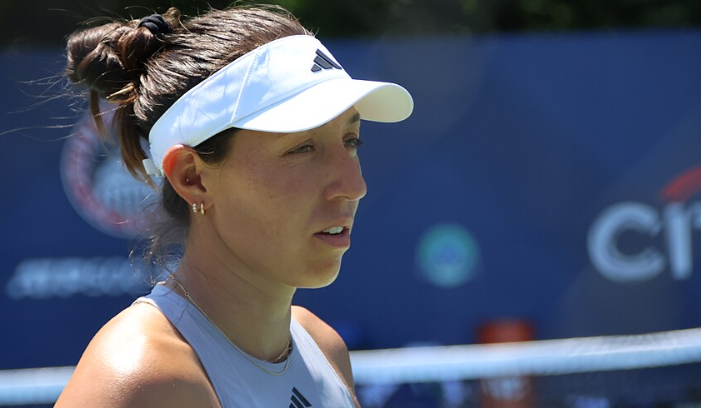
Valerie Camillo accepts responsibility after microphones capture Pegula criticizing Mirra Andreeva during WTA Finals practice in Indian Wells, prompting new protections for player privacy.
Women’s Tennis Association chair Valerie Camillo has apologized to American tennis star Jessica Pegula after a private conversation with her coach was accidentally broadcast during practice at the WTA Finals in Indian Wells, California. The incident occurred Wednesday, November 4, 2026, when microphones captured Pegula calling fellow player Mirra Andreeva a “diva” and criticizing her behavior on the court.
Camillo addressed the controversy at a news conference on Friday, November 6, acknowledging that the organization had failed to properly inform players and coaches that their conversations could be heard during practice livestreams. The WTA has since disabled audio recording on all practice courts and removed the affected video from its YouTube channel.
The incident has renewed concerns about player privacy at professional tennis tournaments. Pegula, who said she did not know her conversation was being recorded, hopes the controversy will encourage organizers to reconsider how much access broadcasters and spectators should have to athletes outside competitive matches.
Private Conversation Becomes Public
The controversy began during preparations for the season-ending WTA Finals at the Indian Wells Tennis Garden. Pegula, ranked fifth in the world, had been practicing with Russian teenager Mirra Andreeva before speaking privately with her coach, Mark Knowles.
Their conversation was captured by microphones installed for a WTA YouTube livestream. The equipment was intended to provide viewers with sounds from the practice courts, including players hitting tennis balls and other ambient noise.
Instead, viewers heard Pegula discussing Andreeva’s behavior during their practice session. The American described the 19-year-old French Open champion as a “diva” and suggested she needed to be humbled.
Pegula also criticized Andreeva’s attitude and expressed disappointment with the teenager’s coach, former Wimbledon champion Conchita Martínez. Her comments suggested that she believed Martínez was tolerating behavior that Pegula considered inappropriate.
According to reporting by The Athletic, Pegula expressed frustration over how Andreeva behaved during their practice session. The conversation also included a comparison between Andreeva’s abilities and the competitive mentality of American star Coco Gauff.
Clips of the exchange quickly circulated on social media, drawing widespread attention before the WTA removed the original livestream. Pegula’s representatives subsequently confirmed that she had been unaware the conversation was being broadcast.
Valerie Camillo Takes Responsibility
Camillo acknowledged several failures in how the practice livestream was organized and monitored. She said the WTA had not provided adequate notice or clear signage informing players that microphones were active.
The organization initially issued an apology on Thursday, November 5, accepting responsibility for failing to notify players and their teams. Camillo followed with a public statement Friday addressing the incident and its effect on Pegula.
“I want to specifically apologise to Jessica Pegula and Mark Knowles,” Camillo said, describing the situation as “regrettable and unacceptable.”
Camillo emphasized that Pegula has been an important representative of women’s professional tennis. The American serves on the WTA players’ council and has been active in discussions about conditions affecting athletes on the tour.
The WTA chair also explained that the microphones were originally intended to capture background sounds rather than private conversations. She confirmed that the problematic livestream had been removed and the technical arrangements changed.
The immediate response goes beyond deleting a single recording. Practice-court audio will remain disabled throughout the WTA Finals, preventing similar conversations from being broadcast through the tournament’s official streams.
Camillo said protecting players is a central responsibility of the organization. She acknowledged that the incident fell short of the standards athletes should expect when participating in WTA events.
Jessica Pegula Responds to the Incident
Pegula addressed the controversy during an interview with ESPN on Friday. She described the situation as unfortunate and confirmed that she had received no warning about microphones recording conversations on the practice courts.
The American said the incident reflected a larger problem involving surveillance and media access at professional tennis tournaments. Players have increasingly found their practice sessions, emotional reactions and interactions with coaches recorded and shared with audiences.
Pegula recognized that behind-the-scenes coverage can be attractive to tennis fans. However, she questioned whether every private moment needs to become part of the viewing experience.
She said she hoped the experience would help athletes continue advocating for stronger privacy protections. The issue is especially important to players who believe they should have opportunities to discuss their performances without the expectation of being constantly recorded.
Pegula also acknowledged the uncomfortable nature of the publicity surrounding her remarks. Her representative told The Athletic that she had contacted those involved to apologize after learning that the conversation had been broadcast.
During a separate media appearance Friday, Pegula appeared to make light of the situation. She tapped a microphone before speaking and jokingly checked whether it was switched on, drawing laughter from reporters.
Her response suggested an effort to move beyond the controversy while keeping attention on the underlying privacy concerns. There has been no public indication that the incident will result in disciplinary action against her.
Coco Gauff Previously Raised Similar Concerns
The controversy follows another widely discussed incident involving Coco Gauff at the Australian Open in January 2026. Cameras recorded the two-time Grand Slam champion smashing her racket after losing a quarterfinal match to Ukraine’s Elina Svitolina.
Gauff had moved away from the main court and believed she was in a more private area. Footage of her emotional reaction nevertheless circulated widely, prompting questions about whether athletes should be filmed during moments they consider personal.
Gauff subsequently called for clearer boundaries between public competition and private player spaces. She argued that athletes need somewhere to release frustration without having every reaction recorded for broadcast or social media.
Six-time Grand Slam champion Iga Swiatek also expressed concern about the increasing level of observation at tournaments. The Polish player questioned whether athletes were being given enough opportunities to spend time away from cameras.
Tournament organizers have explored possible responses. A WTA event in Texas introduced a designated room earlier this year where players could privately release frustration following matches.
The latest incident differs because it involved an ordinary conversation rather than an emotional reaction to a defeat. However, both situations raise questions about whether tournament organizers are adequately informing players when cameras and microphones are recording.
WTA Finals Approach Amid Privacy Debate
The controversy comes just before the WTA Finals, scheduled for November 8 through November 15 at the Indian Wells Tennis Garden. The season-ending tournament brings together eight leading singles players and the qualifying doubles teams.
Pegula and Andreeva are both among the singles competitors. Other participants include Gauff, Aryna Sabalenka and Elena Rybakina, with the competition featuring group-stage matches followed by elimination rounds.
Pegula is scheduled to face Gauff in her opening singles match on Sunday, November 8. The tournament will provide another major opportunity for the American to compete against the world’s leading players after a successful season.
The WTA has not announced additional long-term policies following the microphone incident. For the current tournament, its decision to remove practice-court audio represents the most immediate change.
Camillo’s apology has placed responsibility for the broadcast on the organization rather than on the athletes whose conversation was recorded. Whether the episode leads to permanent changes in microphone use, player notification and broadcast access remains an unresolved issue for professional tennis.
IMAGE: Source Own work Author Hameltion CC4