
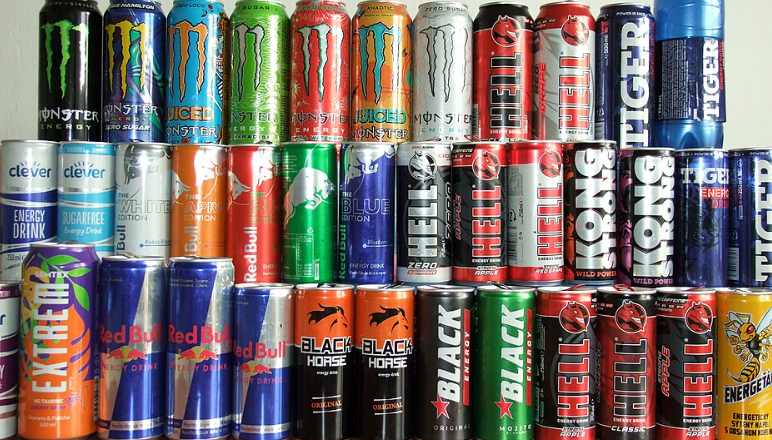
A campaign launched after the death of 15-year-old Zachary Miron helped bring about a new provincial law restricting energy drink sales in stores, online and through vending machines.
Quebec will prohibit the sale of energy drinks to children under 16 beginning December 11, 2026, following a public campaign led by the parents of a teenager who died after consuming one of the beverages. The provincial government has already adopted the legislation, replacing months of uncertainty over whether restrictions would be introduced.
The National Assembly passed the law on June 11, just before the legislature’s summer recess. The measure follows sustained pressure from Veronica Martinez and David Miron, whose 15-year-old son, Zachary Miron, died during a school skiing trip in January 2024.
The new rules will apply to convenience stores, supermarkets, online retailers and vending machines. They will also prohibit adults from knowingly purchasing energy drinks for children under 16.
Quebec’s decision represents a significant change in how the province regulates highly caffeinated beverages. Previously, federal rules required health warnings on these products but did not establish the same general retail sales prohibition for teenagers.
Family Campaign Follows Teenager’s Death
Zachary Miron was a student at Externat Sacré-Cœur, a private school in Rosemère, north of Montreal. He died after suffering a medical emergency during a school ski trip to Morin-Heights in January 2024.
According to his family, Zachary had taken prescription medication for attention-deficit/hyperactivity disorder earlier that morning. He subsequently drank an energy drink purchased from a vending machine at the ski facility.
His parents said he suffered cardiac arrest while riding a chairlift. The incident devastated the family and prompted questions about the possible dangers of combining stimulant medication with highly caffeinated beverages.
Reporting by Global News identified the drink as Red Bull. The family’s account and subsequent reporting concerning the coroner’s findings linked Zachary’s death to an interaction between his prescribed medication and ingredients in the energy drink.
The circumstances do not establish that every energy drink presents the same risk to every consumer. However, the case drew attention to the potential consequences of caffeine consumption among children, particularly those taking certain medications.
Martinez and Miron began advocating for stronger restrictions to prevent similar incidents. Their campaign developed into the Zachary Miron Movement, supported by parents, schools, health organizations and community representatives.
The family wanted lawmakers to move beyond warning labels and limit access to energy drinks at the point of sale. Their efforts ultimately became part of a province-wide discussion about protecting young consumers.
Parents Bring Their Appeal to Quebec Lawmakers
On April 1, 2026, Martinez and Miron appeared at a news conference at Quebec’s National Assembly. They urged provincial lawmakers to prohibit energy drink sales to children and teenagers.
The parents met with Health Minister Sonia Bélanger to discuss the proposed restrictions. Quebec Solidaire legislator Guillaume Cliche-Rivard supported their campaign and helped bring the issue before the legislature.
Bélanger expressed openness to stronger regulation but initially stopped short of promising an outright ban. The government indicated that it would consult health officials and other political parties before deciding how to proceed.
The family’s campaign gained support as public attention increased. Schools and other organizations argued that existing product warnings were insufficient to prevent young people from purchasing energy drinks.
A petition presented to the National Assembly called for a ban on sales and distribution to people under 16. It also asked the government to consider extending the restrictions to everyone under 18.
By May 6, a motion presented in the National Assembly acknowledged that the campaign had collected more than 35,000 signatures. The number was substantially higher than the 15,000 initially reported during the early stages of the debate.
The petition helped demonstrate the breadth of public concern, although signatures alone did not determine the government’s decision. The proposed restrictions still required legislative approval.
Quebec Passes New Energy Drink Law
The government moved ahead with legislation in June. On June 11, the National Assembly adopted Bill 9, the Act to Prevent the Harmful Effects of Energy Drinks on the Health of Young People.
The law establishes a minimum purchasing age of 16 for products meeting its definition of an energy drink. It also restricts indirect sales intended to bypass that age limit.
Businesses will be prohibited from selling energy drinks to an adult or older teenager when they know the beverages are being purchased for someone under 16.
The legislation also covers free distribution. Providing an energy drink to a child under 16 will be treated in the same manner as selling one.
Online retailers and vending-machine operators must comply with the restrictions. This provision is particularly relevant because Zachary’s parents said their son purchased his drink from a vending machine during the school trip.
Retailers may request government-issued photo identification to confirm that a customer is at least 16. If the identification does not establish the person’s age and identity, the seller must refuse the transaction.
The legislation does not impose a complete ban on energy drinks for every person under 18. Teenagers aged 16 and 17 will generally remain eligible to purchase products covered by the law.
That distinction reflects a narrower restriction than the broader prohibition initially discussed by some campaigners. The adopted measure focuses on children younger than 16.
Which Drinks Will Be Restricted?
Quebec defines the affected products according to their caffeine concentration and additional ingredients. Under the legislation, a beverage generally qualifies as an energy drink when it contains at least 150 milligrams of caffeine per litre and other ingredients such as taurine, vitamins or minerals.
Ordinary coffee and tea are excluded from this definition. The government may also clarify which other products fall within the restrictions through regulations.
The distinction matters because energy drinks often contain a combination of caffeine and other substances marketed as improving alertness or energy. Some are packaged in large containers that can be consumed quickly.
According to Quebec’s public health guidance, individual energy drinks commonly contain between 50 and 180 milligrams of caffeine per can. The amount varies depending on the product and serving size.
Health Canada limits caffeinated energy drinks to 180 milligrams of caffeine per serving. Manufacturers must also provide warnings and information about ingredients and recommended consumption.
Federal guidance advises that children should not consume caffeinated energy drinks. The Canadian Paediatric Society similarly discourages their use by children and teenagers.
Health authorities identify several concerns associated with excessive caffeine intake, including sleep disruption, increased heart rate and other unwanted effects. Individual sensitivity, the amount consumed and possible interactions with medication can influence the risk.
Schools and Health Groups Support Restrictions
The Zachary Miron Movement attracted support from educational organizations throughout Quebec. On April 16, the Fédération des établissements d’enseignement privés announced that 21 school organizations had united behind restrictions on energy drink sales to young people.
The coalition included representatives from public and private education. Parents, school administrators and unions also participated in the campaign.
Their involvement reflected concerns about how easily students could obtain caffeinated energy drinks. Supporters argued that restricting sales would provide an additional safeguard alongside education and product labeling.
The Quebec Maritimes Junior Hockey League also joined the campaign in April. Its involvement brought attention to energy drink consumption among young athletes and the distinction between energy drinks and beverages intended for hydration during sports.
Medical organizations have repeatedly warned that energy drinks should not be treated as substitutes for water or conventional sports drinks. Caffeine and other added ingredients serve different purposes from the fluids and electrolytes used for hydration.
The campaign demonstrated how a family’s advocacy could bring together organizations that do not normally participate in the same public health initiatives.
Retailers Prepare for December Enforcement
With the legislation adopted, Quebec’s next challenge is implementing the restrictions across different types of retailers.
The provincial government has published guidance explaining how businesses should identify affected beverages and check customers’ ages. The rules are scheduled to take effect on December 11, 2026.
The law includes financial penalties for violations. Adults who improperly sell energy drinks to children under 16 outside a commercial retail setting can face fines ranging from $500 to $1,500.
The legislation also allows penalties for underage purchasers who violate its requirements. Enforcement provisions are intended to discourage unauthorized transactions while encouraging businesses to follow the new standards.
For Martinez and Miron, the legislation represents a major development in the campaign that followed their son’s death. Their efforts helped move the issue from a family appeal to an enforceable provincial restriction.
The remaining question is how effectively the rules will be applied once they take effect. Retailers, online sellers and vending-machine operators have until December 11 to prepare for Quebec’s new minimum-age requirements.
IMAGE: Source Own work Author Oto Zapletal CC4