
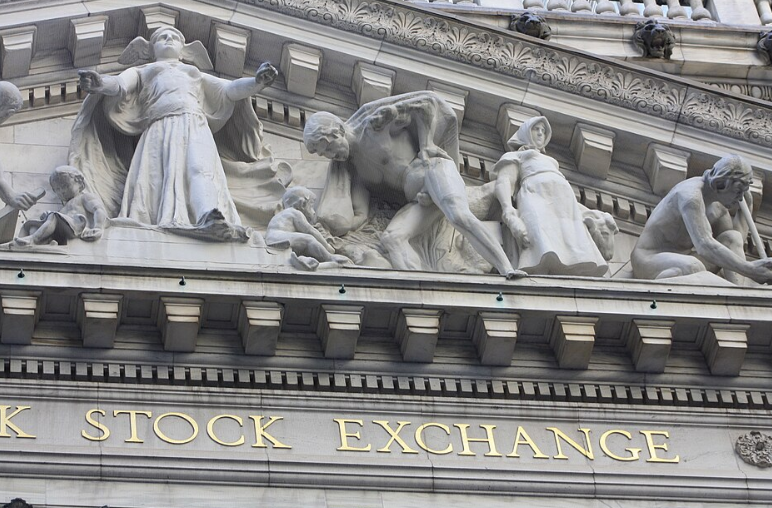
U.S. stocks surged Wednesday after Democrats won control of Congress, but the Dow fell more than 1,800 points Thursday as concerns about artificial intelligence investments triggered a sharp market reversal.
The Dow Jones Industrial Average surged more than 1,500 points on Wednesday, November 4, 2026, after Democrats won control of both chambers of Congress in the U.S. midterm elections. The rally, supported by falling oil prices and hopes for progress in U.S.-Iran peace negotiations, was quickly reversed Thursday as technology stocks led a sharp selloff across Wall Street.
By Thursday’s closing bell, the Dow had fallen 1,833 points, or 3.4%, to 51,523.06. The S&P 500 dropped 4.4% to 7,353.73, while the technology-heavy Nasdaq Composite plunged 5.5% to 24,315.00.
The losses erased the previous day’s post-election gains and raised fresh questions about the outlook for artificial intelligence investments. Chipmakers, technology companies and businesses connected to data-center construction suffered some of the largest declines.
Democrats’ Election Victory Initially Boosts Stocks
The November 3 midterm elections gave Democrats control of the House of Representatives and Senate, changing the balance of power in Washington. The Associated Press called Democratic control of the Senate late Tuesday and the House early Wednesday.
Investors initially welcomed the result as a possible source of greater predictability in government policy. Some market participants also viewed divided control between Congress and the White House as a potential constraint on major legislative changes.
The positive response helped lift stocks across multiple sectors Wednesday. The Dow gained approximately 3%, its strongest one-day performance since April 2025.
Retailers, healthcare companies and other businesses considered sensitive to economic conditions participated in the advance. Financial stocks also benefited, with JPMorgan Chase among the major companies posting gains.
The rally was not based on the election alone. Investors were also responding to declining crude oil prices, easing Treasury yields and expectations that diplomatic negotiations could reduce tensions involving Iran.
Lower energy prices can benefit consumers and businesses by reducing transportation, manufacturing and operating costs. They can also ease inflation pressures, potentially giving the Federal Reserve greater flexibility when considering interest-rate policy.
Those expectations supported the initial buying. However, they did not guarantee that lower energy prices or a more favorable political environment would continue.
Thursday’s Selloff Erases the Gains
The market’s optimism disappeared Thursday as investors shifted their attention toward technology valuations and the future of artificial intelligence infrastructure.
The Dow dropped more than it had gained Wednesday. Losses spread across the S&P 500, while the Nasdaq suffered its steepest daily decline since the market turmoil of April 2025.
The Nasdaq also entered correction territory, meaning it had fallen more than 10% from its most recent record high. The decline reflected growing concerns about whether the enormous investments being made in artificial intelligence would generate sufficient financial returns.
According to Reuters, semiconductor stocks experienced particularly severe selling. The Philadelphia Semiconductor Index fell 12.2%, its largest daily decline since April 2025.
Nvidia, one of the biggest beneficiaries of demand for AI computing equipment, lost approximately 9.3%. Advanced Micro Devices declined more than 17%, while other semiconductor companies also came under pressure.
The selloff affected businesses supplying electricity, networking equipment and other infrastructure used by large data centers. Investors questioned whether planned construction projects could face delays, higher costs or increased political scrutiny.
The decline also reflected concerns about company earnings. Qualcomm shares fell after its sales outlook raised questions about smartphone demand and revenue associated with Apple.
The sudden reversal demonstrated how rapidly investors could change their assessment of the political and economic environment. Wednesday’s confidence in the election outcome gave way to fears about the costs and risks associated with AI expansion.
Data-Center Expansion Faces Political Uncertainty
Artificial intelligence infrastructure has become a major area of investment for technology companies. Large data centers require substantial electricity supplies, specialized computer chips and extensive construction projects.
Public opposition to some developments has increased because of concerns about electricity prices, water consumption and the effects of new industrial facilities on surrounding communities.
Democratic victories in several states raised questions about how future federal and local policies might affect those investments. Investors considered whether elected officials could introduce additional restrictions, environmental requirements or limits on construction.
These concerns do not mean that Congress has approved a national prohibition on data centers. The incoming Democratic majorities will not take office until January 2027, and future legislation remains uncertain.
Regulatory changes would also depend on the legislative process and, in many cases, cooperation with President Donald Trump’s administration.
The market reaction nevertheless showed how sensitive technology valuations have become to expectations about AI spending. Companies whose shares reflect substantial future growth assumptions can experience particularly sharp declines when investors begin questioning those expectations.
Iran Negotiations and Oil Prices Influence Trading
Energy markets provided another important influence on the week’s stock movements. Oil prices declined earlier in the week as investors assessed the possibility of diplomatic progress between the United States and Iran.
The prospect of reduced tensions raised hopes that disruptions to energy supplies could ease. Lower oil prices supported airlines, transportation companies and other businesses that spend heavily on fuel.
Wednesday’s stock rally reflected some of that optimism. Falling energy costs can reduce inflationary pressure and support household spending, both of which can improve expectations for corporate earnings.
However, oil prices reversed direction Thursday as uncertainty surrounding the conflict continued. Brent crude rose approximately 3.9%, according to the Associated Press.
That rebound demonstrated the fragile nature of the earlier optimism. Expectations of peace negotiations can influence markets before any formal settlement is reached, leaving prices vulnerable to changing diplomatic developments.
Higher oil costs can increase inflation pressure, while falling energy prices can create different challenges for producers and companies dependent on drilling activity.
Investors must therefore weigh the potential benefits of lower fuel costs against the uncertainty surrounding geopolitical negotiations and future energy supplies.
JPMorgan Faces Prospective Senate Investigation
The Democratic election victories also created the prospect of increased congressional oversight of major financial institutions.
Senate Democrats are preparing to investigate JPMorgan Chase’s former banking relationship with convicted sex offender Jeffrey Epstein after taking control of the chamber in January 2027.
Reuters reported that the planned inquiry is expected to involve the Senate Finance Committee, which Oregon Democrat Ron Wyden is positioned to chair. Investigators reportedly intend to examine decisions made by senior bank executives concerning Epstein’s accounts and business relationships.
Particular attention may focus on Mary Erdoes, the chief executive of JPMorgan’s Asset & Wealth Management division. The proposed investigation could examine what bank officials knew about Epstein’s conduct and how they responded to concerns raised during the banking relationship.
JPMorgan has previously reached settlements related to its association with Epstein without admitting liability. The bank has expressed regret over the relationship while denying that it assisted Epstein in committing crimes.
A congressional investigation would be separate from those civil settlements. It could involve requests for documents, witness testimony and further examination of the bank’s internal procedures.
The inquiry remains a planned congressional action rather than a completed investigation. Its ultimate scope and any findings cannot be determined from the information currently available.
Investors Await Economic Data and Federal Reserve Signals
Beyond politics and technology, investors are monitoring economic indicators that could influence future Federal Reserve decisions.
Employment data, inflation trends and Treasury yields remain important factors in determining the direction of financial markets. Strong job growth can support consumer spending, but it may also reduce expectations for interest-rate cuts if inflation remains elevated.
Weaker employment figures could encourage expectations of monetary easing. However, they might also raise concerns about slowing economic activity and declining business demand.
Treasury yields fell Thursday as investors moved toward assets traditionally considered less risky during periods of stock-market volatility. The movement reflected a shift in sentiment after Wednesday’s broad advance.
Market analysts will also examine upcoming corporate earnings for evidence that businesses are maintaining revenue growth and controlling expenses. Results from major technology companies will be particularly important because of their large influence on stock indexes.
The Dow’s price-weighted structure can also make its point movements appear unusually large. A 1,500-point change carries a different percentage significance when the index trades above 50,000 than it would at much lower levels.
Percentage changes provide a more useful comparison across different periods. Wednesday’s approximately 3% advance was substantial, but Thursday’s 3.4% decline was large enough to reverse it completely.
Political Changes Leave Markets Facing New Risks
The incoming Democratic Congress could influence federal oversight of financial institutions, technology companies, government spending and other major sectors. However, election results alone do not establish which policies will ultimately become law.
Investors are still assessing how a divided federal government could affect trade, taxation, energy development and corporate investment. Some businesses may benefit from greater policy stability, while others could face additional regulatory scrutiny.
The sharp movements on November 4 and 5 illustrate the difficulty of assigning a lasting market trend to a single political event. Falling oil prices and hopes for diplomatic progress initially encouraged buying, but concerns about AI spending quickly overwhelmed those gains.
Wall Street now faces another test as investors evaluate economic reports, changing energy prices and the possibility of new restrictions on data-center development. Thursday’s close left the Dow at 51,523.06, below its level before Wednesday’s rally, with technology stocks accounting for much of the market’s renewed weakness.
IMAGE: NYSE facade Source Own work Author Ryan Schwark CC1