
The Arizona utility reports higher third-quarter profits, record summer electricity demand and a 25-year agreement with TSMC as it prepares for major infrastructure expansion.
Pinnacle West Capital Corporation reported stronger third-quarter earnings on November 3, 2026, as record summer electricity demand and growing industrial activity boosted sales across Arizona. The Phoenix-based utility holding company also raised its full-year earnings forecast and outlined major investments needed to serve expanding semiconductor manufacturing and other large electricity customers.
The company reported net income attributable to common shareholders of $434.2 million, or $3.49 per diluted share, for the quarter ending September 30. That compared with $413.2 million, or $3.39 per share, during the same period in 2025.
Operating revenue increased to approximately $1.97 billion from $1.82 billion a year earlier. Management attributed the improvement to higher electricity usage, customer growth and favorable weather conditions during an unusually demanding Arizona summer.
Pinnacle West Raises Its Earnings Forecast
Pinnacle West increased its 2026 adjusted earnings outlook to between $5.05 and $5.25 per share, up from its previous projection of $4.55 to $4.75. The revised forecast reflects stronger electricity sales during the first nine months of the year and expectations for continued growth.
Chairman, President and CEO Ted Geisler discussed the results during Tuesday’s earnings conference call alongside Chief Financial Officer Andrew Cooper and other senior executives. Management emphasized that Arizona’s expanding industrial economy is becoming an increasingly important source of electricity demand.
Weather-normalized retail electricity sales grew 9.5% during the quarter. Commercial and industrial sales increased 14.5%, while residential electricity sales rose 4.5%.
Weather-normalized figures attempt to remove the effects of unusual temperatures, providing a clearer picture of underlying demand. The strong increase suggests that customer growth and industrial expansion are contributing substantially to higher electricity consumption.
Pinnacle West now expects weather-normalized retail sales to increase between 8% and 10% for the full year. The company also raised its longer-term sales growth forecast to an annual range of 8% to 10% through 2030.
The outlook remains a projection rather than a guarantee. Actual results will depend on economic conditions, customer demand, weather, regulatory decisions and the timing of new industrial projects.
Arizona Summer Sets Electricity Demand Records
Arizona’s extreme summer temperatures tested the utility’s infrastructure and operating systems. Arizona Public Service, Pinnacle West’s primary subsidiary, experienced 12 record-setting peak-demand days during the season.
Electricity demand reached a new system peak of 9,166 megawatts on August 2. That exceeded the previous year’s peak by more than 500 megawatts.
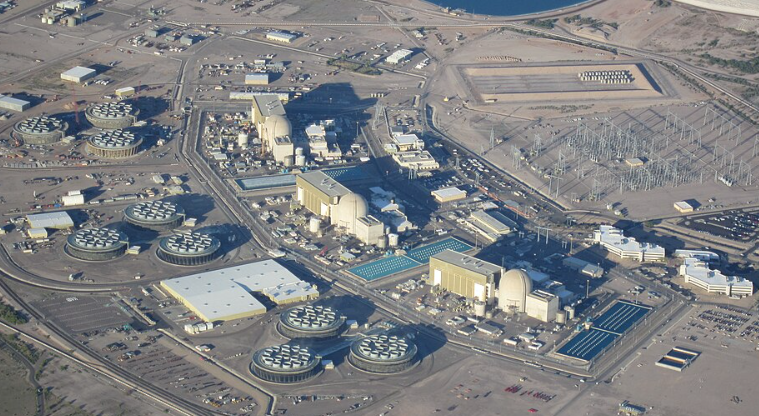
The Palo Verde Nuclear Generating Station played an important role in meeting demand. According to company executives, the plant achieved a 100% capacity factor during the summer, operating at its maximum rated output over the period.
Palo Verde is among the largest nuclear generating facilities in the United States. Its electricity supports Arizona customers and the broader Southwest power grid, providing a steady source of generation during periods of intense heat.
Geisler credited the utility’s operational preparation and infrastructure investments for maintaining service through the demanding summer. He also acknowledged employees who worked during extreme temperatures and storms.
The experience demonstrated the importance of planning for electricity demand that can rise sharply during hot weather. As Arizona attracts more residents and large industrial facilities, maintaining sufficient generation and transmission capacity is becoming increasingly important.
TSMC Agreement Supports Semiconductor Expansion
One of the company’s most significant announcements involved a new electricity supply agreement with Taiwan Semiconductor Manufacturing Company, commonly known as TSMC.
Pinnacle West executed a 25-year direct pricing contract in October to support TSMC’s expanding semiconductor manufacturing campus in Arizona. The agreement covers approximately 1.88 gigawatts of electricity demand when the campus reaches full development.
The arrangement is subject to approval by the Arizona Corporation Commission. It includes upfront capital contributions and financial protections intended to ensure that infrastructure built for TSMC does not create additional costs for existing residential customers.
The contract represents the company’s first major agreement under its direct pricing framework. Pinnacle West expects to use similar arrangements for other large industrial customers seeking substantial electricity supplies.
Semiconductor manufacturing requires reliable electricity for complex production equipment, cooling and other continuous operations. As chipmakers expand their Arizona facilities, utilities must build enough infrastructure to accommodate demand without weakening service for existing customers.
Executives said commercial and industrial expansion is an important reason for the company’s stronger sales outlook. The growing demand also creates opportunities for future investments in power generation and transmission.
Electricity Needs Could Double by 2041
Pinnacle West’s long-term planning anticipates substantial increases in electricity consumption over the next 15 years. Its recently filed Integrated Resource Plan projects that annual customer energy requirements will more than double by 2041.
The company forecasts approximately 80,600 gigawatt-hours of annual electricity demand by that year. Peak demand could reach 14.5 gigawatts, more than five gigawatts above current levels.
Meeting those requirements will involve a combination of natural gas generation, solar facilities, battery storage and other resources. The company’s preferred plan identifies nearly 15 gigawatts of additional generation and storage capacity over the planning period.
It also calls for approximately 2.6 gigawatts of additional transmission capacity to connect new resources and serve expanding communities and industrial facilities.
These figures are planning projections, not completed construction commitments. Pinnacle West expects to add individual projects to its capital forecasts as contracts, competitive procurement processes and other development requirements provide greater certainty.
The approach is intended to balance the need for new infrastructure with financial discipline. Building facilities too early could create unnecessary expenses, while delays could make it harder to serve new customers reliably.
Regulatory Decision Remains Important
Pinnacle West is awaiting a decision from the Arizona Corporation Commission on Arizona Public Service’s pending rate case. The company expects a ruling before the end of 2026 but has acknowledged that the timing and outcome remain uncertain.
The case concerns the rates APS may charge customers and the amount it can recover for operating expenses and infrastructure investments. Regulatory decisions also affect the utility’s opportunity to earn a return on invested capital.
Management hopes that future formula-based rate adjustments will reduce the time between infrastructure spending and authorized recovery of those costs. The company has established a goal of bringing earned returns within 50 basis points of authorized levels by 2029.
Pinnacle West is also raising equity capital to help finance expansion. During 2026, it has used an at-the-market share program and related financing arrangements to support its investment plans.
These transactions help the company maintain a balanced financial structure while funding large capital requirements. Share issuance can strengthen the balance sheet, although it also increases the number of shares outstanding.
Customer Assistance and Flood Relief
Pinnacle West also announced financial assistance for Arizona communities affected by recent flooding. Through APS, the company committed $250,000 in emergency assistance to the Navajo Nation and Hopi Tribe.
The utility is evaluating additional recovery needs following flash floods in northern Arizona and the Four Corners region. The contribution is intended to support communities dealing with damage and emergency expenses.
APS is separately making $5 million in company-funded assistance available to customers experiencing financial hardship. The support is not limited to flood victims and will not be funded through customer electricity rates.
The utility also announced more than $33 million in customer bill credits following regulatory approval. A typical residential customer is expected to receive approximately $14 in savings on the November electricity bill.
The credits will be applied automatically, with amounts varying according to customer usage and applicable billing arrangements.
Growth Brings Opportunities and Challenges
Pinnacle West serves approximately 1.5 million Arizona homes and businesses through APS. Its expanding customer base, industrial development and rising electricity demand are reshaping the company’s long-term investment plans.
The third-quarter results demonstrate the financial benefits of increased electricity consumption, but the company faces substantial infrastructure and regulatory challenges. New generating facilities, transmission lines and financing arrangements will be essential as demand continues growing.
The next important development is the pending Arizona rate case decision. Investors and customers will also be watching whether the TSMC agreement receives regulatory approval and how Pinnacle West translates its long-term resource plan into specific construction projects.
With its earnings forecast raised and electricity demand reaching new records, Pinnacle West enters the final quarter of 2026 preparing for an extended period of expansion across Arizona’s power system.
IMAGE: Source Own work Author Cuhlik CC0