
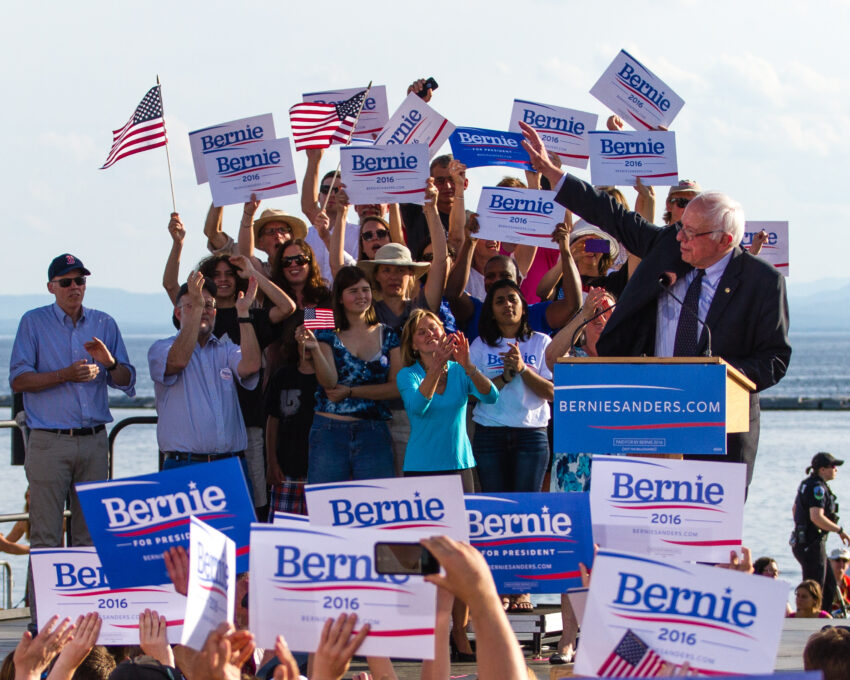
Sen. Bernie Sanders and Rep. Mike Lawler offered competing views on affordability, healthcare and political divisions during the November 1 edition of Face the Nation, just two days before the 2026 midterm elections.
Sen. Bernie Sanders and Republican Rep. Mike Lawler presented sharply different assessments of the nation’s economy and political direction on the November 1, 2026, broadcast of Face the Nation with Margaret Brennan. Their interviews came as candidates across the United States made their final appeals to voters before Tuesday’s midterm elections.
Sanders argued that Democrats could mobilize working-class voters despite disagreements within the party. Lawler defended his record in Congress while acknowledging that Americans remain concerned about rising prices and healthcare costs.
The CBS News broadcast also featured Pennsylvania Gov. Josh Shapiro and election specialists who discussed voting procedures and possible challenges after Election Day. Brennan reported that more than 52 million Americans had already voted, leaving millions more expected to participate on November 3.
Sanders Focuses on Working-Class Voters
Sanders, an independent senator from Vermont who caucuses with Democrats, has spent recent days campaigning for candidates in several states. His activities included virtual rallies and town halls supporting Democratic candidates in Maine and Michigan.
He also discussed races in Florida and Minnesota, where he believes economic concerns could motivate voters across political lines. Sanders said his campaign appearances were intended to draw attention to household expenses and the growing concentration of wealth.
Brennan asked why he was investing time in Florida when CBS News rated the state as likely to support Republicans. Sanders responded that he was not taking any election result for granted.
He praised Florida Democratic Senate nominee Angie Nixon for her grassroots campaign and her emphasis on the difficulties facing working families. Nixon won her party’s primary and is competing for a Senate seat in a state Republicans have carried in recent major elections.
Sanders argued that concerns about grocery prices, rent and transportation costs extend well beyond Florida. He pointed to the financial difficulties experienced by millions of Americans while wealthy individuals continue accumulating substantial assets.
His criticism centered on whether economic growth is producing meaningful improvements for ordinary households. He described Democratic candidates such as Nixon and Maine’s Troy Jackson as representatives of an approach focused on wages, affordability and economic opportunity.
Michigan Democratic Dispute Draws Attention
One of the interview’s most contentious moments concerned Michigan’s Senate election, where Democrat Abdul El-Sayed faces Republican Mike Rogers. The race has attracted national attention because of its importance to the balance of power in Congress.
Brennan questioned Sanders about disagreements between El-Sayed and Rep. Haley Stevens, who narrowly lost the Democratic primary. Stevens had publicly criticized political advertisements associated with El-Sayed’s supporters and raised objections concerning his positions on Israel.
At the time Sanders was interviewed, the dispute was already creating uncertainty about Democratic unity. Stevens subsequently announced her endorsement of Rogers, a decision that intensified the disagreement during the final weekend of campaigning.
Sanders dismissed the suggestion that the controversy would prevent Democrats from competing effectively. He acknowledged the close primary but argued that voters had broader concerns about President Donald Trump’s policies.
The senator accused Trump of undermining constitutional principles and favoring wealthy Americans through his tax policies. Sanders also criticized the administration’s approach to healthcare and described the war involving Iran as unlawful.
Those statements represented Sanders’ political and legal assessments, rather than findings established during the interview. The administration and Republican lawmakers have defended their economic and national security policies.
The discussion also turned to accusations of antisemitism and disagreements over Israeli government policy. Sanders, who is Jewish, strongly condemned antisemitism while arguing that criticism of Israel’s government should not automatically be treated as prejudice against Jewish people.
Brennan clarified that the controversial advertisements Stevens criticized were not produced by El-Sayed’s campaign. El-Sayed had separately said that he disagreed with the material.
Lawler Defends Republican Economic Record
New York Republican Mike Lawler joined the broadcast from his home state, where he is seeking another term in the House of Representatives. His district is among the competitive seats targeted by national Democrats.
Lawler expressed confidence in his campaign and emphasized his work helping constituents. He said his office had handled more than 10,000 constituent cases and helped secure more than $140 million for the district.
He also pointed to legislation he had supported, including tax and housing measures. Those figures were presented by Lawler as evidence of his record and were not independently audited during the interview.
Brennan challenged him on the continuing rise in consumer prices, noting that wages had failed to keep pace with inflation during the previous six months. She asked why voters should continue trusting Republicans to improve affordability.
Lawler attributed part of the problem to inflation during the previous administration and energy disruptions associated with the Middle East conflict. He also cited economic growth and private-sector employment gains as signs of progress.
The congressman argued that expanding housing construction and domestic energy production could reduce financial pressure on households. His comments reflected the Republican position that tax reductions and fewer regulatory restrictions can encourage investment and lower costs.
Healthcare Becomes a Major Campaign Issue
The interview also addressed health insurance, an issue receiving renewed attention as Affordable Care Act open enrollment begins for 2027. Higher premiums and changes to federal financial assistance have created additional uncertainty for some households.
Lawler said the healthcare system needs structural changes rather than a temporary extension of existing subsidies. He criticized Democratic leaders for rejecting proposals he characterized as bipartisan compromises.
Brennan questioned him about projections indicating that federal tax and spending legislation could increase the number of uninsured residents in New York. Lawler disputed the figures and defended the Republican approach.
The disagreement illustrated a broader debate over whether federal policy should prioritize restoring financial assistance, changing insurance regulations or adopting more extensive healthcare reforms.
Neither interview established a shared solution to rising insurance expenses. Healthcare remains one of several issues on which the parties are making different policy arguments to voters.
Shapiro Warns About Political Rhetoric
Pennsylvania Democratic Gov. Josh Shapiro also appeared on the program and discussed election security, political threats and the atmosphere surrounding the midterms. He is seeking reelection while campaigning for other Democratic candidates in Pennsylvania.
Shapiro expressed concern about the possibility of disputes over vote counting and the certification of election results. Brennan questioned whether his warnings could themselves undermine public confidence in the electoral process.
The governor said his concerns reflected experiences during previous elections and political disagreements with the Trump administration. His comments were predictions and concerns, not evidence that officials would interfere with the upcoming count.
Shapiro also spoke about threats against his family and the 2025 arson attack at the Pennsylvania governor’s residence. He said such incidents had affected him personally but would not determine how he performed his responsibilities.
He argued that elected officials should demonstrate restraint even when their policy disagreements are substantial. The discussion showed how political rhetoric and personal security have become prominent concerns during the campaign.
Candidates Deliver Final Campaign Messages
The program opened with recorded statements from candidates in several closely watched races. Texas Democratic Senate candidate James Talarico linked the affordability crisis to what he described as corruption in government.
Ohio Republican gubernatorial candidate Vivek Ramaswamy offered a sharply different message. He portrayed the election as a fundamental choice between competing political and economic approaches.
Michigan Democrat Abdul El-Sayed emphasized the difficulty families face when purchasing groceries. His comments reflected a campaign focused heavily on the cost of living and access to essential services.
President Trump also appeared in recorded remarks discussing his extensive campaign schedule. Brennan reported that he had participated in dozens of in-person and telephone rallies during October.
Trump expressed confidence that the rallies would generate support for Republican candidates. Texas Republican Sen. Ted Cruz offered a more cautious assessment, warning that his party could face significant challenges in statewide races.
Neither Talarico, Ramaswamy, El-Sayed, Trump nor Cruz participated in the program’s live interviews. Their recorded remarks were included in Brennan’s opening presentation of the political landscape.
Election Integrity and Vote Counting Under Scrutiny
Election administration became another major subject during the broadcast. Sanders was questioned about allegations involving ballot strategy in Alaska’s Senate contest and whether partisan tactics could damage confidence in the results.
Sanders criticized efforts by political groups to support minor candidates for strategic advantage. However, he distinguished questionable campaign tactics from conduct that necessarily violates election law.
Election law specialist David Becker separately discussed legal challenges involving Alaska’s ballot procedures. He emphasized that election officials and courts have established responsibilities for administering voting and resolving disputes.
CBS News elections executive Anthony Salvanto also examined the national electoral outlook. His presentation included a House model estimating 229 Democratic seats, which would constitute a narrow majority if realized.
That estimate was a forecast rather than an election result. Actual control of Congress will depend on ballots cast and counted across individual races.
With Election Day scheduled for November 3, the competing messages reflected the issues dominating the final campaign period: affordability, healthcare, national security and confidence in democratic institutions. Election officials will begin reporting results after polls close, although some close contests may require additional counting before winners can be established.
IMAGE: Bernie Sanders. Photo: Jake Bucci / Wikimedia, taken 2015-05-26, CC BY 2.0