
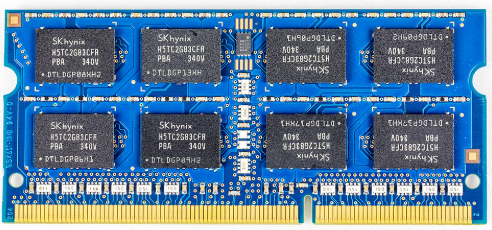
The South Korean chipmaker reported quarterly revenue above 100 trillion won for the first time, fueled by soaring demand for artificial intelligence memory chips and rising prices.
SK Hynix shares surged nearly 11% on Wednesday, October 28, 2026, after the South Korean semiconductor manufacturer reported record third-quarter earnings that exceeded Wall Street expectations. Strong demand for artificial intelligence memory chips pushed quarterly revenue above 100 trillion won for the first time in the company’s history.
The chipmaker reported revenue of 104.62 trillion won (approximately $78 billion) and operating profit of 83.33 trillion won (about $62 billion) for the July-to-September period. Its operating margin reached an extraordinary 80%, reflecting sharply higher memory prices and increased sales of premium products used in AI data centers.
Shares listed in Seoul closed approximately 10.9% higher at 1,487,000 won, while the company’s U.S.-listed shares climbed more than 10% toward $160 in trading following the announcement. The rally came as investors responded to stronger-than-expected profits, plans for substantial shareholder returns and management’s forecast that memory-chip shortages could continue through 2030.
SK Hynix also announced plans to return approximately 100 trillion won ($75 billion) to shareholders during 2026, including dividends and stock repurchases. The announcement reinforced the company’s position as a major supplier of the advanced memory technology powering artificial intelligence systems.
Revenue and Profits Reach New Records
SK Hynix reported that third-quarter revenue increased 32% from the previous quarter and 328% from the same period in 2025. Operating profit rose 38% from the second quarter and more than sevenfold from a year earlier, reflecting exceptional growth in the memory market.
The company’s operating profit exceeded the approximately 77.5 trillion won analysts had expected, according to financial market reporting. Net profit reached 39.78 trillion won, more than triple the amount reported a year earlier.
The company’s 80% operating margin was particularly notable because memory-chip manufacturing traditionally experiences significant changes in profitability as prices rise and fall. Higher selling prices allowed SK Hynix to generate considerably more operating profit from each unit of revenue.
Strong demand for advanced memory has helped suppliers gain pricing power after years of investment in increasingly sophisticated manufacturing technology. SK Hynix has benefited from its established position in high-bandwidth memory, a specialized category of chips used alongside powerful AI processors.
The company’s results also demonstrated how quickly the semiconductor industry’s financial performance can change when demand grows faster than manufacturing capacity. Its latest figures reflect a combination of higher shipment volumes, premium product sales and significant increases in memory prices.
Artificial Intelligence Drives Memory-Chip Demand
The expansion of AI data centers has become one of the strongest sources of demand for SK Hynix products. Companies developing and operating artificial intelligence systems require large quantities of high-performance memory to process information efficiently.
High-bandwidth memory, commonly called HBM, is designed to move large amounts of data rapidly between memory and processors. It is particularly important for advanced AI accelerators, which perform intensive calculations involved in training and running artificial intelligence models.
SK Hynix has been expanding production of HBM4, the latest generation of the technology. The company said shipments increased substantially during the third quarter as customers adopted newer AI hardware.
Management expects HBM4 to surpass the previous HBM3E generation in both shipment volume and revenue during the fourth quarter. That transition reflects growing customer demand for memory capable of supporting increasingly powerful processors.
Sales of DDR5 memory used in servers also increased, contributing to the company’s strong DRAM results. Meanwhile, demand for enterprise solid-state drives supported higher sales of advanced NAND flash products used in data centers.
Average selling prices for DRAM products increased by a percentage in the high 20s from the second quarter. NAND prices also climbed by a percentage in the mid-20s, further supporting profitability across the company’s product portfolio.
The price increases show how supply limitations have affected customers beyond the specialized HBM market. Businesses purchasing conventional server memory and storage equipment are also facing higher costs as manufacturers prioritize products with stronger demand and profitability.
Memory Shortages Could Continue Through 2030
One of the most significant announcements accompanying the earnings report was SK Hynix’s forecast that demand for memory chips could continue exceeding available supply through 2030. The company attributed that outlook to expanding AI investment and the difficulty of rapidly increasing semiconductor manufacturing capacity.
Building new chip factories requires substantial capital, specialized equipment and lengthy construction and installation periods. Advanced memory production also involves complex manufacturing processes that can limit how quickly companies increase output.
SK Hynix said demand for high-bandwidth memory is more than twice its available supply. That imbalance has encouraged customers to secure long-term agreements rather than depend entirely on future purchases at prevailing market prices.
The company has signed supply agreements with 14 major customers covering more than 50% of its expected production capacity for 2027 and 2028. Those customers include major cloud computing companies that operate large AI infrastructure networks.
The agreements provide SK Hynix with greater visibility into future demand and help the company plan manufacturing investments. They also contain pricing mechanisms designed to reflect changing market conditions within agreed ranges.
Management expects additional demand from businesses incorporating AI into software, customer service, search systems and other operations. Longer-term growth could also come from robotics, autonomous vehicles and other applications involving physical AI systems.
However, forecasts extending through 2030 remain uncertain because demand depends on future technology investment and economic conditions. Changes in customer spending, manufacturing capacity or competing technologies could alter the supply outlook.
SK Hynix Announces $75 Billion Shareholder Return Plan
SK Hynix outlined plans to distribute approximately 100 trillion won to shareholders during 2026, equivalent to about $75 billion. The program includes at least 30 trillion won in cash dividends and more than 60 trillion won in share repurchases and cancellations.
The company completed a 40 trillion won repurchase program announced in August and expects the purchased shares to be canceled. Its board also approved another 20 trillion won in repurchases, although only half of that amount is designated for shareholder returns.
The remaining 10 trillion won in the newly approved repurchase program is intended for employee compensation. Because those shares are not designated for cancellation, they are excluded from the company’s shareholder return total.
The board approved a third-quarter cash dividend totaling 14 trillion won, or 20,000 won per share. That payment includes a regular dividend of 10,000 won per share and a special dividend of the same amount.
The special payment reflects gains from SK Hynix’s investment in Japanese memory manufacturer Kioxia. The company said it intends to distribute most of the investment proceeds to shareholders rather than retain the entire amount.
Chief Executive Kwak Noh-jung emphasized that successful strategic investments should provide benefits to investors. The company also plans to continue returning a substantial portion of free cash flow while financing its expansion into advanced memory production.
The unusually large shareholder return program demonstrates the financial resources generated by the current semiconductor market. However, future dividends and buybacks will still depend on earnings, investment requirements and board decisions.
Manufacturing Expansion Remains a Priority
Despite its shareholder distributions, SK Hynix plans to increase capital spending significantly in 2027. Management expects additional manufacturing capacity to support continued demand for HBM4 and other advanced memory products.
The company intends to expand production at its M15X facility and increase its use of advanced DRAM manufacturing processes. It expects HBM4 to become its main high-bandwidth memory product during the fourth quarter.
SK Hynix is also preparing to expand manufacturing at its Yongin semiconductor complex in South Korea. The company’s plans include additional investment in facilities and infrastructure both domestically and internationally.
In NAND flash production, SK Hynix intends to increase the share of chips manufactured using its advanced 321-layer technology. These products are designed to support high-capacity storage requirements, including enterprise solid-state drives.
The investments are intended to improve production capabilities while supporting future revenue growth. However, management said it would continue evaluating customer demand, profitability and investment efficiency when determining the timing and scale of spending.
Solidigm IPO Plans Put on Hold
SK Hynix also confirmed that it had discontinued its review of a potential initial public offering for Solidigm, its U.S.-based memory and storage subsidiary. The company cited financial market conditions and concerns about whether the transaction would deliver the benefits originally anticipated.
Solidigm was established after SK Hynix acquired Intel’s NAND memory and storage business. The subsidiary specializes in products including enterprise solid-state drives used in data centers and other computing environments.
An IPO could have raised outside capital to help fund manufacturing expansion and reduce the financial burden on SK Hynix. However, the company decided that proceeding under current conditions would not achieve its intended objectives.
Reports had suggested that Solidigm could seek a U.S. stock market listing at a valuation reaching approximately $150 billion. The company has not announced a new timetable for reconsidering that option.
Semiconductor Stocks Rise Alongside SK Hynix
The stronger-than-expected earnings report contributed to gains across the memory-chip industry. Samsung Electronics shares climbed approximately 9% in Seoul, while U.S. memory manufacturer Micron Technology also advanced.
The Roundhill Memory ETF rose around 5%, reflecting stronger investor interest in companies exposed to memory demand. The market reaction suggested that investors viewed SK Hynix’s results as evidence of broader industry strength.
Analysts generally responded positively to the earnings figures and the company’s confidence in continued demand. However, some remained cautious about semiconductor valuations and the possibility that expanding production could eventually reduce shortages.
Susquehanna analyst Mehdi Hosseini maintained a neutral view on SK Hynix, expressing a preference for other memory companies, including Micron and Samsung. His assessment illustrates that strong earnings do not automatically eliminate concerns about investment risks.
Competition is also developing as Chinese memory producer ChangXin Memory Technologies works to expand its advanced chip capabilities. New suppliers could eventually challenge established manufacturers, although competing in high-performance memory requires significant technological investment.
SK Hynix enters the final quarter of 2026 with record earnings, a substantial shareholder return program and plans to expand its manufacturing operations. Its next major test will be whether demand for HBM4 and other advanced memory products continues growing fast enough to support the company’s higher production capacity and elevated profitability.
IMAGE: Raimond Spekking Creative Commons Attribution-Share Alike 4.0