
SpaceX has announced a massive financing agreement for Nvidia AI chips, while Elon Musk warns that smaller cloud providers could face bankruptcies and acquisitions as borrowing conditions tighten.
SpaceX announced a $40 billion financing commitment on October 26, 2026, to acquire advanced artificial intelligence chips and related computing equipment. The agreement comes as CEO Elon Musk warns that smaller AI infrastructure companies could face financial trouble because of tightening credit markets and growing concerns about the industry’s enormous spending.
The financing arrangement involves an entity managed by Apollo Global Management, which will purchase specialized computing equipment and lease it to SpaceX. Although the company has secured binding commitments, the transaction has not yet formally closed and remains subject to certain conditions.
The agreement represents one of the largest financing commitments for AI computing infrastructure. It will support SpaceX’s plans to expand its computing capacity using Nvidia’s next-generation Vera Rubin graphics processing units, commonly called GPUs.
Musk announced the financing in a post on X on October 25, describing it as a completed debt arrangement. However, SpaceX’s official statement the following day clarified that the agreement is expected to close before the end of 2026.
The distinction is important because the equipment has not yet been delivered, and the company has not begun the associated lease payments.
How the $40 Billion Financing Deal Works
Rather than purchasing all the equipment directly with conventional corporate debt, SpaceX is using a financial structure that involves leasing computing hardware.
Under the arrangement, an Apollo-managed entity will acquire GPUs and related equipment. SpaceX will then lease the hardware for its expanding AI operations.
Apollo and Goldman Sachs are leading the financing commitments, with Goldman Sachs serving as the sole structuring agent.
Funds managed by BlackRock and Goldman Sachs Asset Management, along with capital accounts advised by KKR, have also made significant commitments.
The leases are expected to last approximately five years, beginning when each shipment of equipment is delivered.
SpaceX anticipates receiving the hardware during the first half of 2027. As a result, the arrangement is not expected to substantially affect its equipment spending during the current quarter.
The company plans to use the GPUs to develop large-scale computing infrastructure for its artificial intelligence services, including Grok, and for cloud computing customers.
In announcing the deal, SpaceX described its ambition to create one of the world’s largest computing infrastructures.
However, the company has not established that the investment will produce the financial returns it expects. Actual results will depend on demand for its services, operating costs and the performance of the new hardware.
Musk Warns Smaller AI Companies Face Financial Pressure
Musk’s announcement was accompanied by a warning about the financial future of businesses that depend heavily on AI data centers.
In his October 25 post, he argued that lenders had become reluctant to provide additional financing to companies without substantial revenue from other businesses.
SpaceX, he said, benefits from its investment-grade credit status and income generated by Starlink satellite internet services and rocket launches.
Those established operations help distinguish SpaceX from specialized AI cloud providers, commonly known as neoclouds.
Neocloud companies operate data centers filled with expensive GPUs, renting computing power to businesses developing or operating artificial intelligence systems.
Their customers include AI developers, research organizations and companies that need large amounts of processing capacity but do not want to build their own data centers.
Many neocloud operators borrow money to purchase hardware, expecting future rental revenue to cover financing expenses and generate profits.
Musk believes the financing model is becoming increasingly vulnerable.
He predicted that many of the more than 200 neocloud businesses could fail or become acquisition targets as lending conditions tighten.
His remarks followed comments from investor Chamath Palihapitiya, who raised concerns about the financial structures supporting AI infrastructure companies and the possibility of unused computing capacity.
Musk also indicated that SpaceX does not intend to acquire struggling neocloud providers.
His predictions remain opinions about future market conditions rather than confirmed outcomes.
Gartner Predicts Major Neocloud Consolidation
Musk’s warning comes alongside a separate industry forecast from research firm Gartner.
On October 14, Gartner predicted that more than 80% of neocloud providers could cease operating independently by 2030 because of financial pressure and insufficiently differentiated business models.
That does not necessarily mean all those companies will close permanently. Some could merge with competitors, be acquired by larger businesses or reorganize their operations.
Gartner warned that AI infrastructure investment is expanding much faster than the revenue expected to support it.
The research firm estimated that AI providers would spend nearly $1 trillion on infrastructure in 2026, followed by approximately $6 trillion in additional investments between 2027 and 2030.
According to its projections, AI data center owners would need to generate approximately $8.5 trillion in cumulative revenue through 2030 to cover capital spending, financing expenses and a targeted 12% return on invested capital.
Gartner estimated that enterprise and consumer AI revenue attributable to data centers would reach no more than $3.6 trillion during the same period.
The difference raises questions about whether the industry can earn sufficient returns on its planned investments.
Gartner also warned that more than $3.5 trillion in AI infrastructure spending could be exposed to potential asset write-downs by the end of 2030 if the current pace of investment continues.
These figures are forecasts based on assumptions about spending, revenue and market conditions. They are not confirmed future losses.
Concerns Grow Over an AI Investment Bubble
Other prominent investors have expressed concerns about the financial sustainability of the artificial intelligence boom.
On October 20, Citadel founder Ken Griffin said investors were likely experiencing an AI-related bubble during an interview at the Future of Global Markets Conference in New York.
Griffin questioned whether businesses were consistently generating enough value from AI systems to justify the money being spent on them.
He also warned about the risk of excessive computing capacity.
If companies purchase more GPUs than customers need, operators could be forced to lower rental prices sharply to attract business.
That would make it harder for companies carrying substantial debt to recover their original investments.
However, Griffin also argued that a financial bubble does not necessarily mean the underlying technology lacks long-term value.
He compared the situation with the internet boom of the late 1990s, when many companies failed but others became influential businesses.
The distinction is important because concerns about AI investment do not automatically indicate that demand for AI technology is disappearing.
The question is whether future revenue and productivity improvements can support the extraordinary amount of capital being committed today.
Power and Infrastructure Create Additional Challenges
Financing is not the only obstacle confronting companies building AI data centers.
Large computing facilities require dependable electricity supplies, cooling systems and specialized electrical equipment.
Projects may face delays when utility connections, transformers or other essential components cannot be delivered on schedule.
These problems can become especially serious for businesses that have already borrowed money to purchase expensive GPUs.
Hardware that cannot be installed or powered may sit unused while financing expenses continue to accumulate.
Another challenge is the pace of technological change.
New generations of AI chips can offer greater processing power and improved energy efficiency, potentially reducing demand for older hardware.
Companies that finance GPUs over several years must consider the possibility that their equipment will lose market value before their borrowing obligations are fully repaid.
These risks help explain why lenders may increasingly favor businesses with established revenue streams and stronger financial resources.
Still, the scale of new AI investment shows that companies continue to expect considerable demand for computing power.
SpaceX Faces Major Spending Commitments Ahead
SpaceX’s latest financing arrangement is part of a broader effort to expand its computing infrastructure.
The company has indicated that capital expenditures could reach $35 billion to $40 billion during the fourth quarter of 2026 alone.
Its new financing commitment gives SpaceX access to additional computing equipment without requiring an immediate purchase of the entire hardware package.
That approach spreads payments over several years but also creates long-term financial obligations.
The company’s ability to generate revenue from AI services will be important in determining whether the investment provides sufficient returns.
For the wider technology industry, the agreement illustrates a growing difference between companies that can attract substantial financing and businesses struggling to secure capital for similar projects.
SpaceX expects to finalize the transaction before the end of 2026, with hardware deliveries and lease schedules beginning in the first half of 2027.
Whether smaller AI infrastructure companies can continue financing their expansion will depend on credit markets, demand for computing services and their ability to turn costly equipment into sustainable profits.
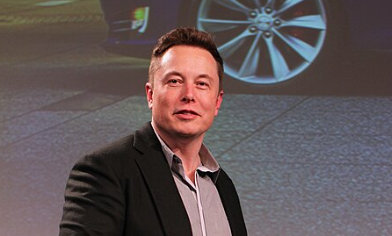
IMAGE: Source Elon Musk at the 2015 Tesla Motors Annual Meeting Author Steve Jurvetson from Los Altos, USA CC2