
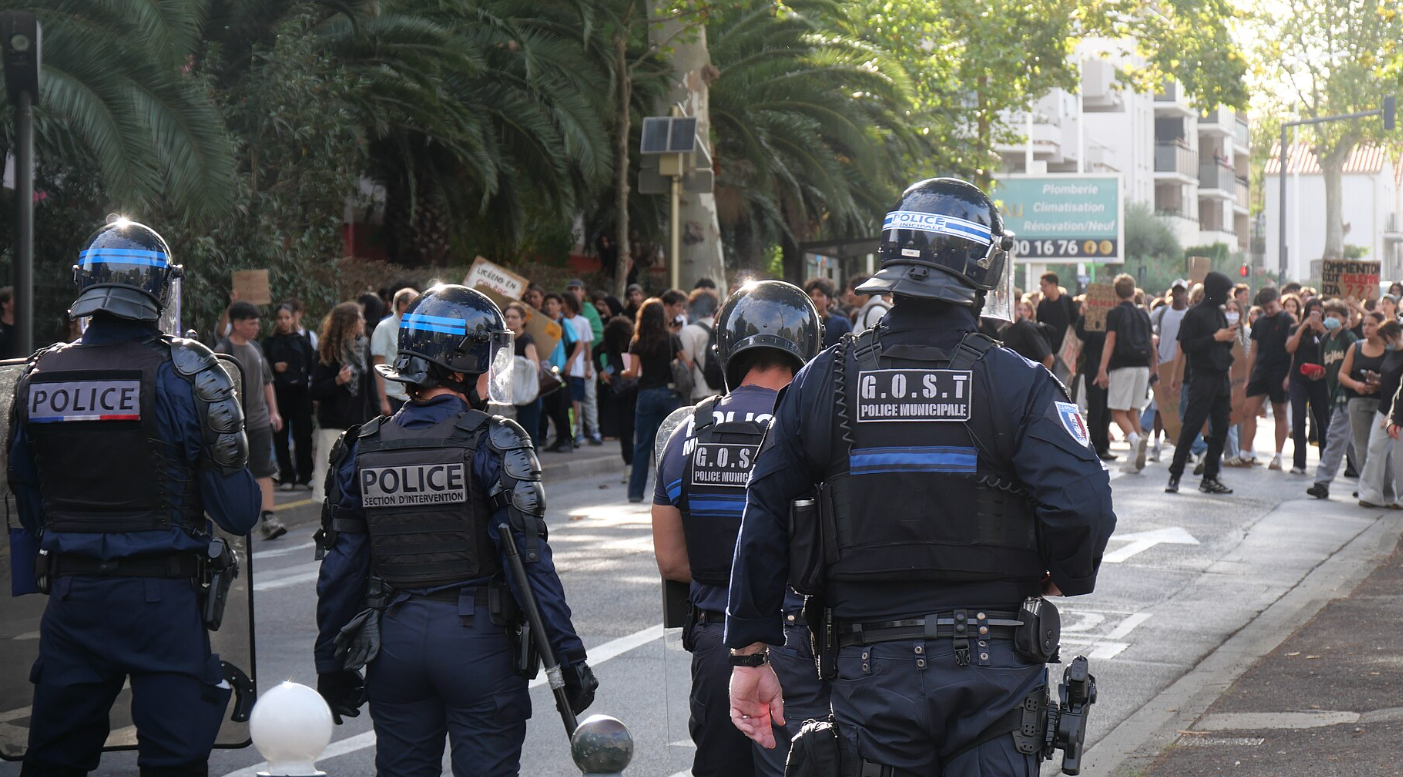
France imposed localized curfews after nationwide protests over living costs and school conditions gave way to riots, looting and thousands of arrests.
French President Emmanuel Macron called for calm after a weekend of nationwide demonstrations over living costs and public services descended into rioting, looting and attacks on public buildings. The unrest hit Paris, Marseille, Lyon, Limoges and other cities on October 17 and 18, creating one of France’s most serious public-order crises in years.
Hundreds of thousands of people had joined largely peaceful marches before violence erupted around some demonstrations. Authorities said about 2,400 people were arrested over the weekend, while nearly 1,000 police officers were injured. One protester died after suffering cardiac arrest during demonstrations in Paris.
Macron Condemns Violence but Stops Short of Emergency Powers
In a televised address Sunday, Macron separated peaceful protesters from those responsible for destruction and looting. He said demonstrators had legitimate concerns but condemned what he described as unrestrained violence by radical far-left groups and criminals.
Macron did not declare a national state of emergency. Instead, he said regional authorities could restrict demonstrations where necessary to protect public buildings and businesses, while the government prepared new policing measures.
Partial curfews were imposed in parts of Paris and several other cities as officials tried to prevent another night of disorder. In Paris, restrictions covered areas around Place de la République and Les Halles. Other municipalities introduced curfews for minors or limits on public gatherings.
The scale of the violence caught authorities off guard.
Interior Minister Laurent Nuñez acknowledged failures in preparation and intelligence gathering and offered his resignation. Macron refused it, saying continuity in the command of police and security forces was necessary while the crisis continued. The president also ordered a review of intelligence and operational planning.
Justice Minister Gérald Darmanin separately acknowledged shortcomings in intelligence work. Officials have faced questions from mayors and business owners who said the police presence was insufficient in some of the hardest-hit areas.
Student Protests Expanded Into a Broader Movement
The unrest grew out of protests that began in high schools in working-class northern suburbs of Paris. Students complained about teacher shortages, deteriorating facilities and wider problems in the education system.
Those demonstrations gradually merged with anger over higher living costs, fuel prices and declining public services. Reuters reported that the government has pledged to place about 3,000 fully qualified teachers who have not yet started work into understaffed schools, but it has not announced a major new increase in education funding.
By Saturday, between roughly 550,000 and 800,000 people were reported to have joined demonstrations across France. Most marched peacefully, but violent groups looted stores, attacked police and damaged public buildings.
The 19th-century town hall in Limoges was severely damaged by fire. Businesses were also attacked in Paris, Marseille, Lille, Lyon, Bordeaux and other cities. The government said more than 3,000 shops were damaged or looted during the unrest.
The Associated Press reported that student organizations have called for additional demonstrations. Activists seeking to revive the Yellow Vest movement have also announced another nationwide protest for Saturday, October 24.
Political Pressure Builds Around Macron
The violence has intensified political pressure on Macron during the final months of his presidency. He cannot seek another consecutive term in 2027 under France’s constitutional two-term limit.
Former Prime Minister Édouard Philippe, who is preparing his own presidential campaign, criticized Macron’s response and called for stronger action to restore order. Leaders on the right and far right have also demanded tougher security measures, while figures on the left have emphasized the grievances that brought students and other protesters into the streets.
National Rally leader Marine Le Pen has used the unrest to reinforce her campaign themes on law and order. She is among the leading candidates in polling for the 2027 presidential election, but the race remains unsettled and voting is still months away.
An Ipsos-BVA political survey released in October found that 82% of respondents viewed Macron’s performance unfavorably, while 15% expressed a favorable view. The poll reflects his weak standing as France faces political fragmentation, budget disputes and growing concern over household finances.
Macron also drew criticism for continuing a planned Gulf trip after the unrest. The Élysée said the visit was intended in part to secure energy supplies and ease fuel-price pressures. Critics argued that he should remain in France during the crisis, while the government defended the trip as connected to the economic pressures fueling public anger.
Economic Damage and More Protests Ahead
The unrest has added to worries about France’s already strained public finances. French stocks, the euro and government bonds came under pressure as investors assessed the political and economic impact of the violence.
The government has announced support for affected companies, including state-backed furlough measures intended to help businesses avoid layoffs and assistance with immediate cash-flow problems. Officials have not yet provided full details on the total cost or how all of the aid will be distributed.
Retailers have reported extensive losses. Carrefour chief executive Alexandre Bompard said 50 of the company’s stores were damaged, including 20 that were looted, with losses running into tens of millions of euros.
Authorities are also reviewing videos and images in an effort to identify people involved in looting and attacks. Police numbers are expected to increase if large demonstrations return next weekend.
The unrest has also prompted travel warnings from several foreign governments, which have advised visitors to avoid demonstrations and large gatherings. There have been no reports of foreign tourists being injured in the violence.
France now faces another test on October 24, when new demonstrations are planned, followed by union-backed strikes scheduled for November 5 over budget cuts and wages. The government’s immediate challenge is to prevent more violence while responding to the school, public-service and cost-of-living complaints that brought hundreds of thousands of peaceful demonstrators into the streets.
IMAGE: Aurelio Cárdenas – Own work CC4