
New survey findings reveal widespread difficulties obtaining menopause treatments, while official shortage measures for Estradot patches have been extended into January 2027.
Thousands of women across Britain are struggling to obtain hormone replacement therapy (HRT) as continuing medicine shortages disrupt menopause treatment. A new Pharmacy2U survey found that 61% of women taking HRT had made repeat visits to pharmacies to collect their prescriptions, while about one-third had searched several pharmacies for medication.
The findings come as the government extends special dispensing arrangements for four strengths of Estradot hormone patches until January 8, 2027. Some of these arrangements have been in place since December 2024, making them among Britain’s longest-running medicine shortage measures.
Pharmacists and women’s health specialists warn that inconsistent access to treatment can cause distress and interfere with the management of menopause symptoms.
Survey Reveals Widespread Prescription Problems
The Pharmacy2U findings suggest that obtaining routine medication has become increasingly difficult for many women receiving menopause treatment.
According to the survey, 61% of women taking HRT had to return to their pharmacy more than once to obtain medication. Approximately 33% visited multiple pharmacies because their usual supplier could not fill their prescription.
Two in five respondents reported feeling stressed because their medication was unavailable, while 15% said they had experienced health problems associated with the shortages.
The survey also found that nearly half of women receiving repeat prescriptions had noticed reduced availability of medicines at their local pharmacy during the previous year.
The Sun reported the findings on October 14, describing how affected patients have spent additional time searching for medicines that form part of their regular treatment.
Phil Day, superintendent pharmacist at Pharmacy2U, said the disruption was more than an inconvenience for people who depend on their prescriptions.
Repeated pharmacy visits can create additional difficulties for women balancing employment, family responsibilities and other health conditions. Those living in areas with fewer pharmacies may face particularly inconvenient journeys.
The survey demonstrates a problem among its respondents, although its findings should not automatically be interpreted as representing every woman taking HRT throughout Britain.
Estradot Shortages Extended Into 2027
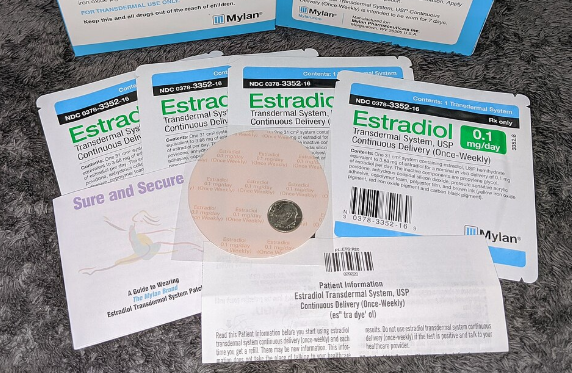
One of the most persistent supply problems involves Estradot, a prescription skin patch that releases estradiol, a form of estrogen used in hormone replacement therapy.
Estradot is available in several strengths, allowing clinicians to select doses according to individual treatment needs.
The Department of Health and Social Care has maintained Serious Shortage Protocols covering four strengths of the medication:
- Estradot 25 microgram patches
- Estradot 50 microgram patches
- Estradot 75 microgram patches
- Estradot 100 microgram patches
The protocols for the 50, 75 and 100 microgram strengths began on December 19, 2024. The arrangement covering 25 microgram patches began on April 3, 2025.
On October 2, 2026, officials extended all four protocols until January 8, 2027.
These dates identify how long the special dispensing arrangements are authorized to operate. They do not guarantee that normal supplies of every product will resume immediately afterward.
The protocols allow pharmacists to supply specified alternative patches without requiring a new prescription from the original prescriber, provided the relevant conditions are met.
For patients, this can prevent delays when a prescribed brand is unavailable but another suitable product can be supplied.
The government has previously attributed Estradot supply difficulties to global disruptions affecting the product. In May, health officials told Parliament that they were continuing discussions with suppliers to stabilize deliveries.
Another HRT Patch Faces Supply Problems
The shortages are not limited to Estradot.
On October 12, the Department of Health and Social Care issued a separate notification concerning FemSeven Conti, a combined hormone replacement patch.
FemSeven Conti contains estradiol and levonorgestrel, providing both estrogen and a progestogen. It is used to treat estrogen-deficiency symptoms in eligible postmenopausal women.
The official notification stated that the product was out of stock until late November 2026.
Health authorities classified the disruption as a medium-impact supply problem and identified other combined patches that remained available.
These included Evorel Conti, Estradot Conti 30/95 and Estradot Conti 40/130.
However, these products contain different hormone combinations or strengths and should not be treated as automatically interchangeable. A healthcare professional must determine whether an alternative is appropriate.
Officials also confirmed that other hormone replacement therapy products remained available, an important distinction from suggestions that HRT supplies had stopped altogether.
Why Consistent HRT Treatment Matters
Hormone replacement therapy is commonly prescribed to relieve symptoms associated with menopause and the decline in estrogen levels.
Symptoms can include hot flushes, night sweats, disturbed sleep, vaginal dryness and changes in mood. For some women, these problems substantially affect daily activities and quality of life.
HRT replaces hormones that become less abundant during menopause and can provide effective relief when prescribed appropriately.
Treatment comes in several forms, including tablets, patches, gels and sprays. The choice depends on a woman’s symptoms, medical history, preferences and individual risk factors.
Some women taking systemic estrogen also need a progestogen to protect the lining of the womb. This is particularly important for women who still have a uterus.
Interrupted treatment can allow troublesome symptoms to return, although the effects differ between patients.
The British Menopause Society advises prescribers to consider equivalent preparations when a usual HRT product is unavailable. Its guidance includes information about approximate dose equivalents and alternative methods of delivering treatment.
The organization also cautions that switching between preparations requires attention to hormone strength and the need for adequate progestogen protection.
Women should not independently change doses, combine patches or discontinue prescribed medication without discussing the decision with a pharmacist or appropriate clinician.
Pharmacists Call for Stronger Supply Measures
The prolonged shortages have renewed concerns among pharmacy organizations about the reliability of Britain’s medicine supply system.
Olivier Picard, chair of the National Pharmacy Association, criticized the further extension of Estradot shortage protocols in October. He also renewed calls for a national taskforce to address persistent medicine shortages.
Pharmacists have warned that supply disruptions place additional pressure on community pharmacies, which must spend time locating stock, contacting suppliers and helping patients obtain alternatives.
The problem extends beyond menopause treatments.
Other medicines affected by recent supply notices include products used to treat conditions such as high blood pressure, digestive disorders and pancreatic enzyme deficiency.
The wider pattern has intensified demands for better communication between manufacturers, healthcare providers and government agencies.
Dr. Nikki Ramskill, a women’s health GP and founder of The Female Health Doctor Clinic, has also expressed frustration with continuing HRT supply problems.
Her concerns reflect the difficulty of improving access to menopause care while patients remain unable to obtain some of the medicines prescribed for them.
Greater awareness of menopause symptoms and increased use of treatment have also placed attention on whether supplies can keep pace with demand.
What Patients Can Do When HRT Is Unavailable
Women who cannot obtain their usual HRT prescription have several options that may help prevent unnecessary interruptions.
A pharmacist can check whether the prescribed medicine is available through another supplier or whether an authorized alternative can be provided under an active Serious Shortage Protocol.
For the affected Estradot strengths, official guidance permits specified alternatives such as certain Evorel or Estraderm MX patches.
Patients must consent to substitutions made under these arrangements, and pharmacists must follow the applicable protocol.
If no suitable alternative is available through the protocol, a pharmacist may advise the patient to contact the prescribing clinician for a revised prescription.
The British Menopause Society also recommends considering alternative HRT preparations where clinically appropriate.
Patients using combined treatments should take particular care to ensure that both the estrogen and progestogen components of their prescribed regimen remain appropriate.
The continuing problem has left many women facing uncertainty about their next prescription. While other treatments remain available, switching medication can require additional advice and coordination.
The government’s latest shortage notices confirm that special arrangements for four Estradot strengths will remain authorized until January 8, 2027, while FemSeven Conti supplies are expected to remain disrupted until late November 2026.
Those dates provide a framework for pharmacies and prescribers, but individual product availability may change before then. Women experiencing difficulties are advised to speak with their pharmacist or prescribing clinician rather than make changes to treatment independently.
IMAGE: Source Own work Author Medgirl131 This file is licensed under the Creative Commons Attribution-Share Alike 4.0 International license.