
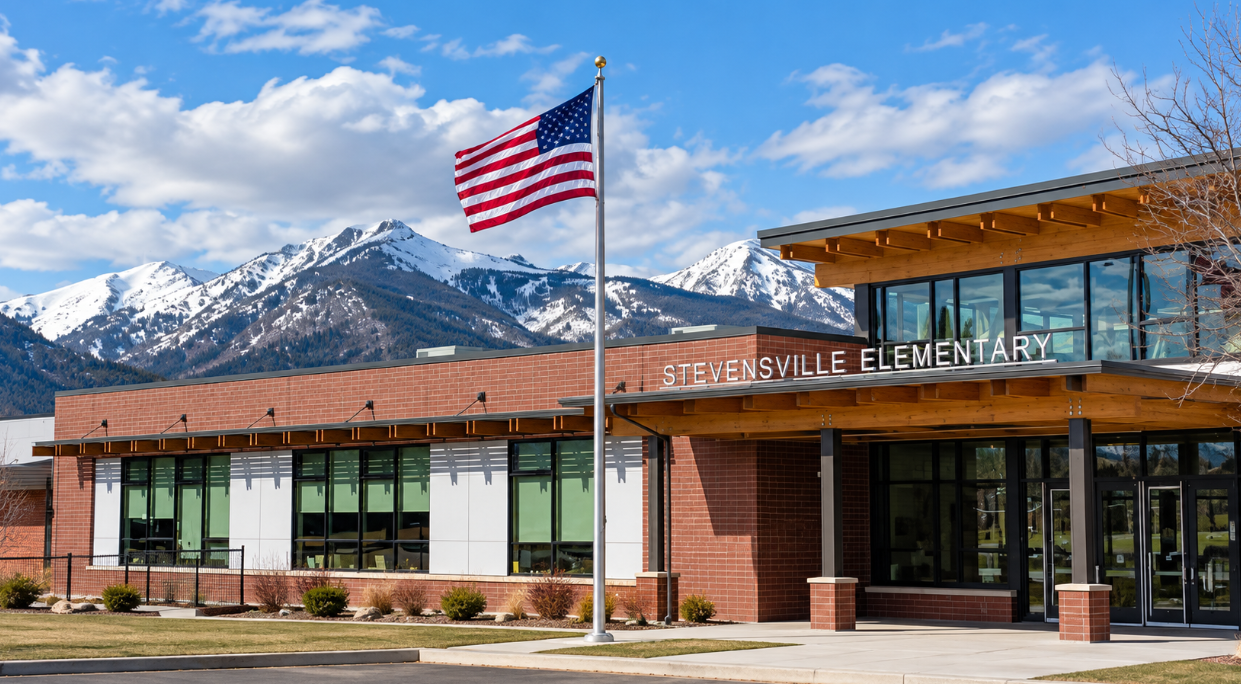
Montana school officials are asking voters to reconsider funding for aging security systems and technology infrastructure, with public forums scheduled for October 21 and 28.
Stevensville School District in Montana is asking voters to approve $300,000 in annual technology funding this November after a larger proposal failed in May. District officials say the money would help replace aging security equipment, maintain essential computer systems and protect classroom funding from additional budget pressures.
The new proposal seeks $150,000 annually for the elementary district and another $150,000 for the high school district. Voters previously rejected a request totaling approximately $500,000, prompting school officials to reduce the amount and explain how the money would be spent.
Superintendent Jon Konen said the district surveyed residents after the May election and discovered concerns about how technology affects classroom instruction. He emphasized that the funding request is primarily about maintaining school operations and student safety rather than increasing students’ time on computers.
The district has scheduled two public forums for October 21 and October 28. Both meetings will take place from 6 to 7 p.m. in the school choir room, giving residents an opportunity to ask questions before the November election.
District Reduces Levy Request After Rejection
The November proposal represents a $200,000 reduction from the amount sought earlier this year. The district is requesting $150,000 for each of its two school districts rather than the $250,000 previously requested from each.
School administrators hope the smaller request and additional community outreach will address concerns raised during the earlier campaign.
Konen said the district conducted a community survey following the failed vote. Responses suggested that some residents believed the technology levy would primarily purchase electronic devices or increase screen time.
School officials say that perception does not reflect the spending priorities.
Technology Director William Hunt explained that much of the proposed funding would support systems that operate behind the scenes. These include electronic door access, surveillance cameras, student information systems and financial software.
Such equipment and services are essential to daily school operations, even though students rarely interact with them directly.
The district also needs technology to manage payroll, student records and other administrative responsibilities. These services require ongoing maintenance, updates and security protections.
School board vice chair Jennifer Gunterman said the district wants residents to understand that the proposal involves more than classroom computers. She identified student safety as a central reason for seeking renewed funding.
Aging Cameras and Servers Need Replacement
One of the district’s priorities is modernizing its security infrastructure.
Some school surveillance cameras are approximately 15 years old, while certain internet servers have been operating for about eight years. Administrators say this equipment needs replacement to maintain reliable service.
The district wants to improve camera coverage in areas where existing equipment does not provide adequate visibility. Officials are also proposing expanded electronic access controls for school entrances.
Key card systems can help schools manage which employees and authorized visitors enter buildings. They also provide administrators with greater control over access to different areas of a campus.
Updated security cameras would improve monitoring of school property and help staff respond to incidents. However, the effectiveness of any system depends on installation, maintenance and the procedures used by employees.
Replacing aging servers is another priority because schools increasingly depend on reliable networks for everyday operations.
Internet connectivity supports state-required assessments, school records, educational software and communication between teachers and families.
Older equipment can create maintenance problems and increase the risk of service interruptions. Modernizing these systems may help reduce those risks while supporting the district’s existing technology requirements.
Technology Funding and Classroom Instruction
Konen has repeatedly emphasized that approving the levy would not mean replacing traditional instruction with computer-based learning.
The district continues to rely on books, handwriting, face-to-face instruction and classroom activities. Administrators describe computers and online resources as additional tools rather than replacements for teachers.
In an explanation published earlier this year, Konen said student laptops and Chromebooks represented only about one-quarter of the proposed technology budget at that time.
That earlier spending breakdown does not necessarily represent the revised November proposal, which places greater emphasis on security and infrastructure.
Schools also use technology for educational assessments, research and career preparation. Students need familiarity with digital systems that are common in colleges, businesses and workplaces.
However, the district says it does not intend to use the revised levy to purchase large numbers of new student computers.
Instead, administrators are focusing on maintaining existing services and replacing critical equipment that is reaching the end of its useful life.
The approach reflects an effort to respond to concerns about screen time while maintaining systems required for modern school operations.
Rejected Levy Adds to Budget Pressures
The failed May proposal created financial challenges for a district already dealing with staffing and enrollment changes.
Stevensville reduced its elementary teaching staff by three positions following the earlier funding difficulties. The reductions contributed to larger classes in some elementary grades, including second, fourth and fifth.
However, district enrollment changes have also affected staffing decisions. In September, Konen reported that elementary enrollment had declined by 55 students, even as total district enrollment increased.
Those figures show that the district’s staffing situation involves several factors. The failed technology levy was one budget pressure, but declining elementary enrollment also influenced personnel decisions.
Technology expenses do not disappear when voters reject a levy. Schools must continue paying for essential services or reduce the equipment and programs they can maintain.
Without dedicated technology revenue, some expenses may have to be covered through the general operating budget.
That fund also supports teachers, classroom materials and other educational services. Administrators argue that using it for technology could place additional pressure on staffing and academic programs.
Konen has warned that continued funding difficulties could eventually affect curriculum offerings and extracurricular activities.
School officials have not announced a finalized list of additional reductions that would automatically take effect if the November measure fails.
Existing Levy Reaches Its Final Year
The funding debate also involves a technology levy voters approved in 2016.
The district established dedicated technology funding that year, but the time-limited portion is reaching its expiration in 2026. Officials say replacement funding is necessary to continue supporting essential systems.
Montana law allows school districts to seek voter approval for dedicated technology levies. These funds can support eligible purchases, equipment maintenance, software, network systems and related technology services.
The arrangement gives local communities a direct role in deciding whether to approve certain school expenditures through property taxes.
For homeowners, the financial effect depends on property values, applicable tax calculations and whether the property is within both the elementary and high school taxing districts.
Konen said the revised proposal would have a relatively modest monthly effect on a home valued at $300,000. Residents seeking a precise estimate should consult the district’s updated levy information and official ballot materials.
The smaller November request may address some concerns about affordability, but voters must still weigh the proposed expense against the district’s stated needs.
Community Forums Scheduled Before November Vote
The school board is organizing two public information sessions to explain the funding request and answer residents’ questions.
Both meetings are scheduled for 6 to 7 p.m. on Wednesday, October 21, and Wednesday, October 28, in the school choir room.
District representatives are expected to discuss planned improvements, technology costs and the potential effects of another failed levy.
The forums also give residents an opportunity to raise concerns about educational priorities, school security and property taxes.
Konen and other district leaders have described the November proposal as an effort to preserve essential infrastructure without diverting more general operating money away from classrooms.
Voters will determine whether the district receives the requested $300,000 in annual technology funding. Until then, officials are focusing on explaining the revised proposal and its expected effect on school operations.
IMAGE: DNR Art Department