
Researchers have identified a new weak point in Plasmodium vivax, a malaria parasite that can hide in the liver and cause illness months or even years after the first infection. The finding could help scientists design a vaccine that blocks the parasite before it establishes a dormant infection. The work was published September 24 in the journal Immunity.
Plasmodium vivax is one of the major parasites that cause malaria in humans. It is especially important in parts of Central and South America, South Asia and Southeast Asia. Unlike some other malaria parasites, P. vivax can remain dormant inside the liver after a person appears to recover.
Those dormant parasites can later become active again.
A person may then develop another bout of malaria without receiving another infectious mosquito bite. These relapses make P. vivax difficult to control because someone can become sick and infectious again long after the original exposure.
The new research was led by scientists at the University of South Florida and collaborators. According to USF Health, the team identified a previously uncharacterized site on circumsporozoite protein, or CSP. This protein covers the surface of the parasite during the stage when it travels from a mosquito bite toward the liver.
The newly identified site is called an epitope. An epitope is a small part of a protein that the immune system can recognize. Antibodies can attach to an epitope and, in some cases, interfere with a pathogen’s ability to infect cells.
Researchers found that antibodies directed at the newly identified region could block P. vivax from invading liver cells.
That is important because the liver is where P. vivax can establish dormant forms called hypnozoites. Once those dormant parasites are present, they can reactivate later and start another blood-stage infection. Preventing the parasite from reaching or entering liver cells could therefore stop both the first infection and later relapses.
The study does not mean a new P. vivax vaccine is ready for use. Researchers still have to turn the discovery into a vaccine formulation and test it through additional laboratory and clinical studies. The scientists said human testing remains several developmental steps away.
The work is important partly because existing malaria vaccines are aimed at a different parasite.
The World Health Organization currently recommends the RTS,S and R21 malaria vaccines for children living in areas where Plasmodium falciparum malaria is a major threat. P. falciparum causes most malaria deaths worldwide and is especially common in sub-Saharan Africa.
Those vaccines have become an important new tool in malaria prevention. They are being introduced along with insecticide-treated bed nets, medicines and mosquito-control programs.
They are not designed specifically to solve the problem caused by dormant P. vivax infections.
The World Health Organization says P. vivax is the dominant malaria parasite in many countries outside sub-Saharan Africa. Treating it can be more complicated because doctors must address both the parasites circulating in the blood and the dormant forms in the liver.
Medicines can be used to clear the liver stage and reduce the risk of relapse. However, some of those treatments require testing for an inherited condition called glucose-6-phosphate dehydrogenase deficiency, or G6PD deficiency. Certain antimalarial drugs can cause dangerous breakdown of red blood cells in people with that condition.
A vaccine that stopped P. vivax before it established a liver infection could attack the problem earlier.
The new study grew from work by two research teams that had been studying the parasite from different directions. One team examined how human immune responses reacted to P. vivax. Another studied the structure of CSP and how antibodies could target it.
The researchers later realized they had independently focused on the same vulnerable region of the parasite.
Noah Sather, a professor at the University of South Florida College of Public Health, said the work identified a previously unknown weakness in the parasite’s surface protein. John Adams, another USF researcher involved in the work, approached the problem through studies of malaria parasites and naturally acquired human immunity.
The researchers say the combination of those approaches strengthened the case that the newly identified region could be useful for vaccine development.
CSP has long been a major target in malaria vaccine research. It is exposed on the surface of sporozoites, the form of the parasite injected into people by infected mosquitoes. Antibodies that bind to CSP may be able to stop sporozoites before they establish infection in the liver.
The challenge is finding the parts of CSP that produce useful protective antibodies.
The new work identifies another site that may be exploited for that purpose in P. vivax. Researchers now want to develop vaccine formulations that can teach the immune system to produce antibodies against this region.
If those antibodies remain strong enough and last long enough, they could potentially stop infection at a very early stage.
There is still a large distance between identifying a promising target and producing a successful vaccine. Scientists must determine the best way to present the target to the immune system. They must also establish the correct dose, determine how long protection lasts and test whether the approach works safely in people.
A vaccine must also work against parasite strains circulating in different parts of the world.
The broader need remains substantial. The World Health Organization estimated that there were 282 million malaria cases and about 610,000 deaths worldwide in 2024. Most deaths were caused by P. falciparum in Africa, but P. vivax remains a major cause of disease in many other regions.
WHO guidance published this year also emphasizes the special problem created by P. vivax relapse. Patients often need treatment that removes parasites from both the blood and liver to achieve what is known as a radical cure.
Relapses do more than make one patient sick again.
A person with a renewed blood-stage infection can infect mosquitoes that bite them. Those mosquitoes can then carry the parasite to other people. This means dormant infections can help keep malaria circulating within a community even when mosquito-control programs reduce new infections.
USF researchers said a large share of P. vivax transmission can be connected to relapse infections rather than newly acquired infections. Blocking the formation of dormant liver parasites could therefore have benefits beyond protecting an individual patient.
It could also reduce opportunities for the parasite to spread.
The discovery comes during a period of renewed progress in malaria vaccines. WHO-recommended vaccines against P. falciparum are now being used in routine childhood immunization programs in more than 20 African countries. Researchers are also studying next-generation vaccines aimed at different parasites and different stages of malaria infection.
The P. vivax finding adds another possible target to that effort.
For now, it remains an early research result rather than a new medical option. The scientists still need to show that a vaccine based on the newly identified site can generate strong and lasting protection in humans.
If those later studies succeed, the approach could address one of the hardest features of P. vivax malaria: its ability to disappear into the liver and return long after the first illness seems to be over.
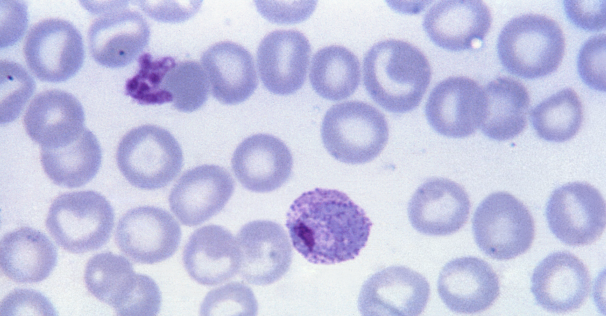
IMAGE: Content Providers(s): CDC/ Steven Glenn, Laboratory & Consultation Division CC0