
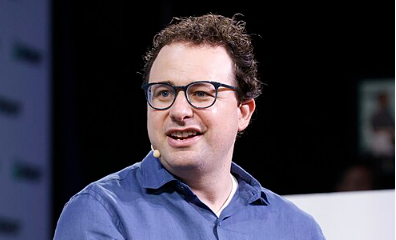
Anthropic is reportedly considering releasing a new artificial intelligence model as it prepares for its upcoming initial public offering. The company’s IPO could be pushed until after the November U.S. midterm elections, according to people familiar with the matter. Reuters previously reported that marketing for the offering was expected to begin in mid-October at the earliest.
OpenAI introduced GPT-6 Astra on September 3 and has seen growing adoption in enterprise settings, according to Reuters. The new model has also gained popularity on OpenRouter, a platform that routes traffic between AI models used by developers. Anthropic’s annualized revenue run rate reached $65 billion by the end of July, up from about $9 billion at the end of 2025.
Astra accounted for about 13% of enterprise AI spending tracked by Ramp. Anthropic’s Claude Fable accounted for about 8%. OpenRouter also reported that spending on OpenAI models surpassed spending on Anthropic models for the first time in more than two and a half years.
The company is projecting its revenue to reach between $190 billion and $200 billion by 2028. Meta has been among Anthropic’s largest customers, but is looking to reduce its use of Anthropic’s models as it develops more AI capabilities internally, people familiar with the matter said. OpenAI has taken some pressure off the race to public markets, easing some pressure on the AI industry. OpenAI CEO Sam Altman recently said his company would not go public in 2026 because of concerns about AI safety.
Reuters reported that Anthropic could push the IPO until after the November U.S. midterm elections. Despite the delay, investors still expect a major offering that could value Anthropic at around $2 trillion and raise up to $100 billion. This would surpass the previous record set by SpaceX’s debut, showing strong investor interest in AI startups. SpaceX raised about $75 billion in its June IPO.
Investors are weighing how spending on new model releases could affect Anthropic’s path to profitability. Some investors told Reuters that OpenAI’s recent gains do not pose an immediate threat to Anthropic because of its existing position in enterprise AI. They also said leadership among Anthropic, OpenAI, Google and other companies could shift as new models are released.
Anthropic still has a sizable revenue lead over OpenAI based on recent annualized figures. OpenAI’s annualized revenue run rate passed $40 billion in July while Anthropic topped $65 billion. Competition is also coming from open-source and open-weight models that can allow companies to operate more of their own AI infrastructure.
Leadership at the company has introduced new operational efforts like the Model Hardware Standard to let software agents interact with physical devices such as robotic arms. Reuters reported that Anthropic introduced the standard in August as part of its work on lab and industrial automation.
Anthropic also confirmed it has a wet biology lab in the Bay Area where AI models are used to run physical experiments, TechCrunch reported. The company’s head of life sciences said that real-world lab work remains essential for testing theories in biology. This lab operates similarly to other biotech labs, conducting research internally and partnering with outside groups.
Anthropic wants to explore how Claude can direct robotic equipment to perform scientific experiments with limited human intervention. The company has stressed that human oversight remains important for safety. Anthropic has also said it wants to use AI to speed work on diseases that have been difficult or financially unattractive for traditional drug companies to pursue.
Anthropic acquired Coefficient Bio, a stealth AI biotech company, in April. Reports valued the stock deal at about $400 million although Anthropic did not confirm the price. Coefficient Bio’s team had been developing AI systems designed to make drug discovery and biological research more efficient.
The wet lab’s focus is on fundamental biology rather than drug discovery, though it has partnered with Novo Nordisk for joint research. Anthropic has faced criticism for launching products that could compete with those of its customers. Reuters reported that Anthropic has set a boundary against conducting clinical trials in part because of concerns about competing with pharmaceutical customers.
To address this, the company introduced a Life Sciences Verification Program to give vetted researchers access to its most powerful models. The program gives qualifying researchers access to Anthropic’s Mythos, Opus and Sonnet models with safeguards designed for professional biology work. Applicants are reviewed for research credentials, security standards and ethical oversight.
Anthropic has also launched Claude Science as part of its growing work in biology and drug research. The company’s alignment lead estimated a greater than 10% chance that AI could cause human extinction within the next decade.
CEO Dario Amodei recently urged the industry to slow down and adopt self-regulation amid growing safety concerns. He has identified bioterrorism as one of the biggest risks associated with AI development. The contrast between these warnings and the existence of a wet lab has drawn attention in the tech industry.
Investor Chamath Palihapitiya joked on social media about the irony of a group warning about AI dangers building a physical lab in San Francisco.
The timing creates an unusual challenge for Anthropic. The company is preparing for what could be one of the largest public offerings ever while its CEO is simultaneously calling for slower development of increasingly powerful AI systems. Anthropic is now deciding whether competitive pressure from GPT-6 Astra justifies putting another advanced model into the market.
IMAGE: TechCrunch CC2