
Star Trek: Strange New Worlds executive producers are standing by the show’s bold genre experiments, even as fans have voiced strong criticism. The show’s fourth season included a puppet episode and a soap opera episode, both of which received low user ratings on IMDb. Despite criticism from some fans, cast member Rebecca Romijn has expressed support for the creative choices made by the show. TVLine reported that a vocal group of fans had criticized the so-called gimmick episodes and rated several of them poorly on IMDb. As of September 17, Rotten Tomatoes listed Season 4 at 90 percent among critics and 37 percent among audience ratings, showing a sharp split between the two groups.
Akiva Goldsman, one of the executive producers, acknowledged criticism that a ten-episode season may devote too much time to genre experiments, according to TVLine. He explained that while they appreciate traditional Star Trek, their show is not meant to be a replica of the original. The title itself suggests that the series explores various genres, and Goldsman emphasized that this approach is intentional. He pointed out that the original Star Trek also moved freely between genres, and that was part of what made it special. Goldsman said the team tries to use genre to move characters forward rather than treating the shifts as jokes for their own sake.
Henry Alonso Myers, another executive producer, said that every season of Strange New Worlds aims to include something for all types of fans. He explained that the goal is not only to satisfy longtime Star Trek fans but also to attract new viewers who might be curious about the show. Myers believes that fans who enjoy classic Star Trek episodes will also appreciate more traditional installments, while others may be drawn to the unusual. The show’s creators want to offer a version of Star Trek that surprises viewers and gives them a fresh perspective. Myers pointed to “Off-Hour” as an example of a more traditional Star Trek episode for viewers who prefer that style.
Strange New Worlds has been experimenting with genre changes since its early seasons, not just in the fourth season. The first season featured a Vulcan body swap comedy, showing that this approach to storytelling was not new for the series. Myers and Goldsman also noted that the original Star Trek had a similar experimental style, even in its early days. Examples from The Original Series include episodes with Captain Kirk split into good and bad versions of himself and the Enterprise visiting a planet modeled on 1920s American gangster culture. The show has also featured episodes involving ancient Rome, Abraham Lincoln, and even space hippies. Those stories include “Bread and Circuses,” “The Savage Curtain,” and “The Way to Eden.” StarTrek.com describes Kirk’s duplicate in “The Enemy Within” as the result of a transporter accident and identifies the gangster culture in “A Piece of the Action” with 1920s America.
However, some fans and critics argue that the current season’s limited number of episodes makes the gimmicks feel excessive. Episodes like ‘Off-Hour’ and ‘Orders of Magnitude’ are seen as more serious and intense, standing out from the usual genre-hopping. Paramount+ describes “Off-Hour” as a crisis involving the Enterprise being pushed toward a catastrophic warp threshold while “Orders of Magnitude” centers on a mission to track down an alien ship.
Still, the producers maintain that their approach is consistent with the spirit of Star Trek as a whole. They believe that by mixing genres, they are honoring the show’s tradition of using storytelling to explore different themes. Earlier seasons also featured comedy and musical elements, and the producers have said they want to keep trying new genres. The producers say that they want to showcase the talents of their cast by allowing them to explore different kinds of roles. Goldsman has previously said the cast’s ability to move between drama, comedy and other styles gives the series freedom to move between genres.
This approach, they argue, helps the show stay fresh. The team has also drawn comparisons to how The Original Series handled genre shifts, showing that their current choices are not entirely new. They believe that fans who enjoy the unusual will be pleased by the creative risks taken in recent seasons.
Romijn described the response to the show’s genre experiments as mixed and said the cast stands behind the creative risks. She also said the fifth season will have fewer gimmick episodes as the series moves toward its ending.
Paramount+ has confirmed that Season 5 will be the final season and will contain six episodes. Season 4 is scheduled to end on September 24, with the final season set to arrive in 2027. Despite criticism, the producers remain committed to the genre-hopping approach that has defined Strange New Worlds.
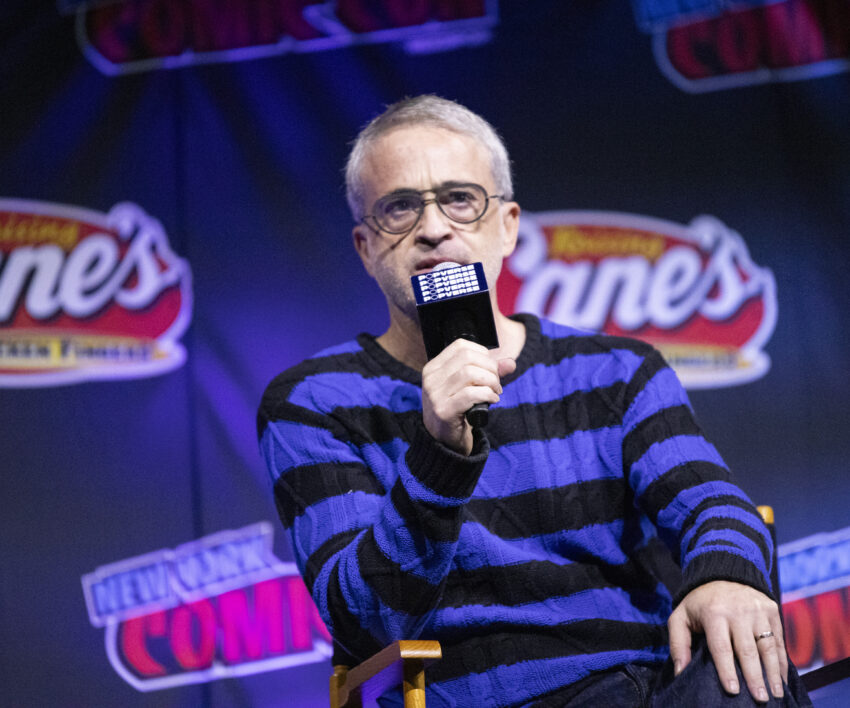
IMAGE: Alex Kurtzman at the 2025 NYCC Star Trek: Strange New Worlds Panel. Photo: Vbrunophotog / Wikimedia, taken 2025-10-11, CC BY-SA 4.0.
This article passed automated originality and source-verification checks before publishing.