
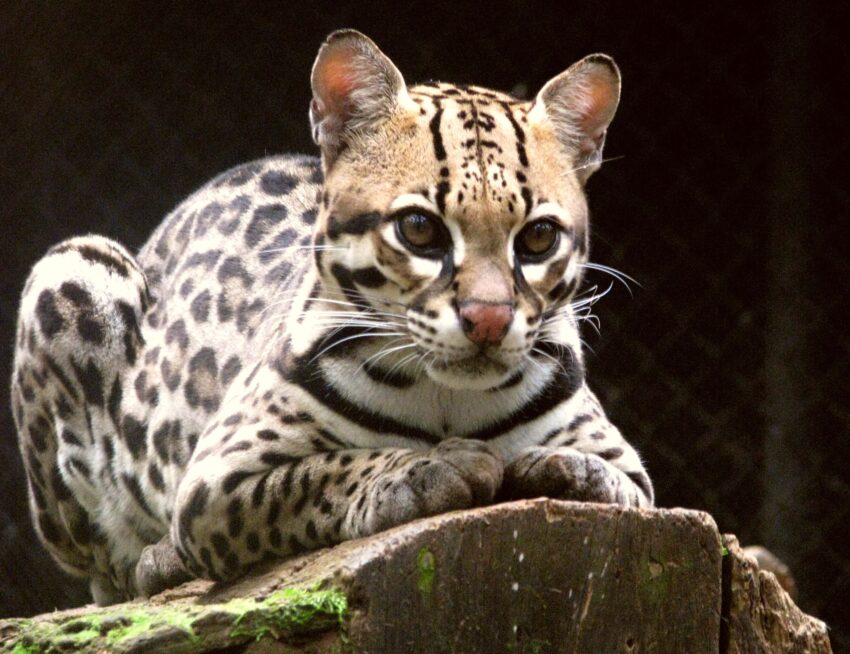
Scientists have identified a new species of wild cat in Bolivia, named Leopardus tilcayo, or the tilcayo cat. This small feline lives in the Yungas, a mountainous cloud-forest region where the Andes meet the Amazon basin. The findings were published Thursday in the scientific journal Current Biology after an extensive genetic study of tiger cats across South America. Researchers say the species separated from other tiger-cat lineages about 1.4 million years ago.
The new cat weighs about 1.3 to 1.4 kilograms, making it smaller than a typical house cat. It measures about 46 centimeters from its head to the end of its body. The story of its discovery began with an unusual encounter by a local family. They found the animal as a kitten and thought it was a domestic cat at first.
After keeping it for some time, they handed it over to the Senda Verde animal refuge in Bolivia. Researchers there noticed its unusual appearance and began investigating further. National Geographic reports that biologist Paola Nogales-Ascarrunz first saw the animal at the refuge after being told about a “weird cat.” Scientists analyzed genetic material from 38 cats from several South American countries, including samples from living animals and eight museum specimens.
In addition to identifying the new species, researchers also found a new tiger-cat subspecies in Peru named Leopardus tigrinus antisuyo. Camera-trap observations suggest that the tilcayo cat is primarily nocturnal. Rodent remains found in its scat indicate that small rodents are part of its diet. Researchers have very little information about the species because only two living individuals and a small number of camera-trap records are known.
The Yungas forests are known for their exceptional biodiversity but are under threat from deforestation, agricultural expansion, fires, and mining. This discovery marks the first time a new living cat species has been formally named and described in more than a century. The tilcayo cat was first studied by Paola Nogales-Ascarrunz, who leads the Programa de Investigación de Félidos Bolivia conservation program.
Nogales-Ascarrunz initially thought the animal belonged to a known tiger-cat species. She became suspicious after noticing that its markings and other physical characteristics did not match descriptions of the known cats. National Geographic reported that its larger rosettes were one of the features that drew her attention.
Nogales-Ascarrunz and other researchers later worked with genetic samples collected from animals and museum specimens. The cat is known locally as the tilcayo, a name used by Bolivian communities. Researchers retained that local name when assigning the animal its scientific name.
Scientists do not yet know how many tilcayo cats remain in the wild. The habitat of this cat is under serious threat from deforestation and other human activity. Researchers have shared their findings with the International Union for Conservation of Nature as conservation specialists consider how individual tiger-cat lineages should be assessed. The tilcayo could eventually be considered endangered, but a formal conservation status has not yet been established.
The research team included Jonas Lescroart and Paola Nogales-Ascarrunz among other scientists. The new species is the first living cat species formally described as new to science in more than a century. The study was published in Current Biology.
Local communities have long known the animal by the name tilcayo. The discovery highlights how local knowledge can help direct scientific research. Researchers said the finding also shows how much biodiversity remains poorly understood in remote regions such as the Yungas.
The new cat species adds another reason for scientists to study and protect the Bolivian Yungas. Scientists are still working to understand more about the tilcayo cat’s behavior and population size. Additional camera trapping and field research are expected to provide more information about where the cat lives and how common it is.
IMAGE: Ocelot (Leopardus pardalis). Photo: Ana_Cotta / Wikimedia, taken 2008-05-25, CC BY 2.0