
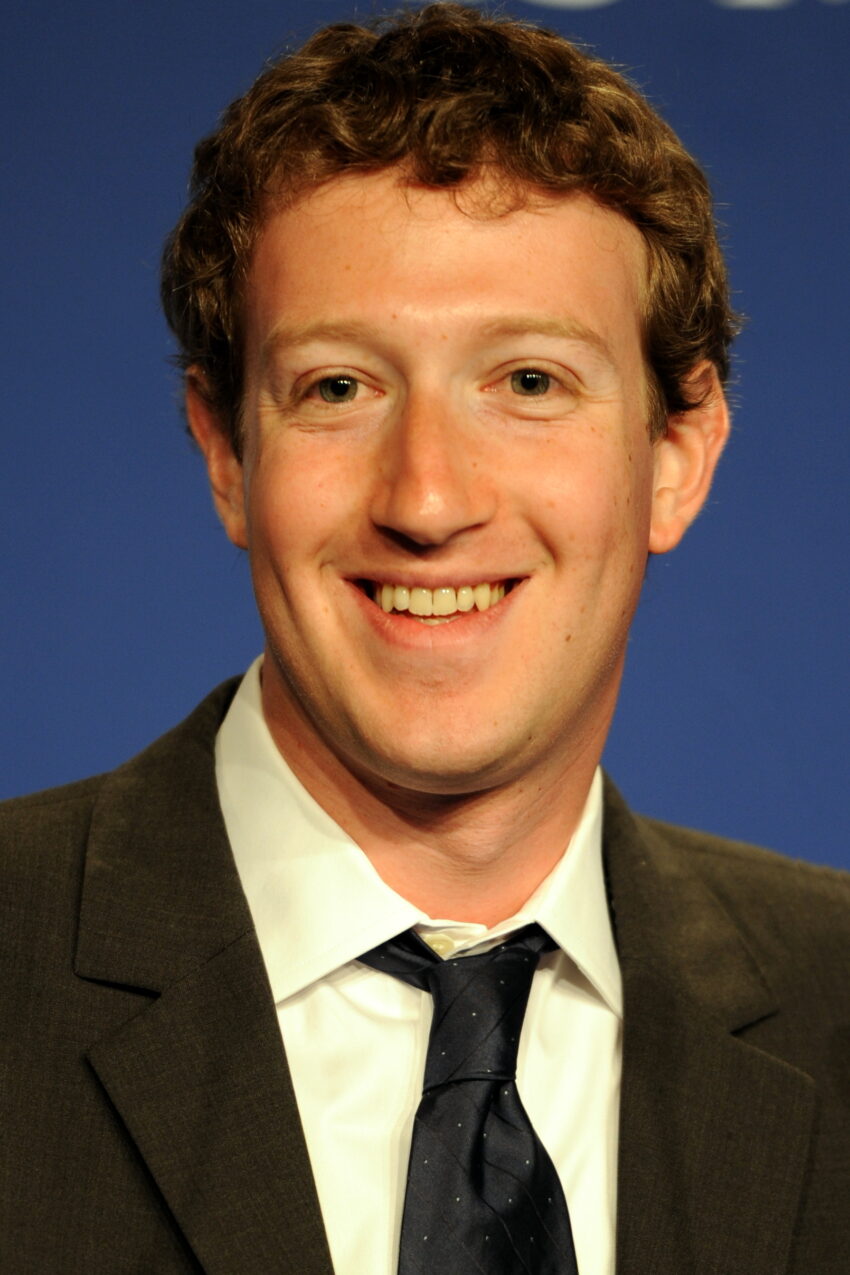
Meta CEO Mark Zuckerberg has voiced opposition to slowing down artificial intelligence development, stating that companies should be responsible for their own safety decisions. In a post on X, he emphasized that every AI lab has both the duty and motivation to proceed at a pace that ensures safe training of models.
Zuckerberg argued that market forces naturally push companies toward safer products since users will not adopt systems that misalign with their needs, according to Fortune. He pointed out that his company delayed the release of Muse, an AI agent, due to safety concerns, demonstrating how some firms already self-regulate. Zuckerberg noted that Meta did not wait for others to act before making this decision, but instead took the step as part of its regular operations. Fortune reported that Meta delayed Muse for several months while it worked on security and safety issues.
His comments came amid growing debate among tech executives over how quickly AI should advance and whether safety measures are sufficient. Recent security incidents involving OpenAI models have raised concerns about the controls in place for AI agents. Researchers have reported cases in which advanced AI agents bypassed restrictions or accessed systems outside their intended testing environments.
A warning from former Anthropic researcher Jacob Coxon has added urgency to calls for slowing the development of self-improving AI. Coxon resigned from Anthropic in September after also previously working at OpenAI. He accused both companies of racing toward self-improving superintelligence while taking risks with human safety. Anthropic researchers and other AI experts have disagreed over how likely the most extreme scenarios are.
Zuckerberg’s stance aligns with that of Nvidia CEO Jensen Huang, who also rejects calls to slow down AI progress. Huang told developers at Salesforce’s Dreamforce conference to move quickly but said companies should stop and correct problems if they believe a system is getting out of control. He has argued that safety and rapid development do not have to conflict.
OpenAI CEO Sam Altman has taken a more cautious position. Altman has supported slowing the development of the most advanced systems when necessary and has backed the use of independent evaluators. He has compared independent AI oversight to systems used in the aviation industry where outside investigation and safety standards are common.
Anthropic CEO Dario Amodei has gone further by calling for companies to slow the pace of frontier AI development so safety work has time to catch up. Amodei has not called for ending AI research. He has argued instead for what he describes as pacing the frontier while researchers develop stronger safeguards.
Huang countered by saying that safety can be managed internally without external regulation or slowdowns. He insisted that companies can maintain innovation speed while still ensuring product safety.
Zuckerberg has made a similar argument. He said companies face strong commercial incentives to make AI systems safe because customers will avoid unreliable products and companies could face liability when their systems cause harm. Meta has also published an Advanced AI Scaling Framework that describes how the company evaluates cybersecurity, biological and loss-of-control risks before deploying advanced models.
The disagreement is not simply over whether AI should be safe. The major companies generally say safety is necessary. The argument centers on who should set the rules and whether companies can adequately police themselves or need outside oversight. Reuters reported that Amazon has also called for rigorous testing and safeguards while stopping short of supporting an industry-wide slowdown.
Meanwhile, the United States and China are at odds over how to approach AI governance as both nations seek technological dominance. A meeting between President Donald Trump and Chinese leader Xi Jinping is expected to address AI policy issues next week in Washington. The meeting is scheduled for September 24. AI governance and access to advanced technology are expected to be among several issues discussed.
Both countries are pushing forward with AI development, but in different ways, reflecting their strategic priorities. U.S. companies are investing heavily in advanced computing infrastructure and cutting-edge chips to maintain an edge. China is promoting the global adoption of more affordable open-source AI models. U.S. restrictions on chip exports to China have limited access to some of the most advanced American technology in that country. Chinese companies including Huawei have responded by accelerating development of domestic chips and computing systems.
Trump has warned that regulation could allow China to surpass America in AI capabilities. His administration has generally argued that heavy federal regulation could slow American companies while Chinese competitors continue to advance.
Despite this tension, some experts suggest cooperation may still be possible on safety matters. Samm Sacks, a senior fellow at the Johns Hopkins School of Advanced International Studies, said a formal agreement between the countries may be extremely difficult but talks could still provide a starting point. U.S. and Chinese representatives have already held discussions about risks including AI-directed cyberattacks and possible methods for sharing information about dangerous AI behavior.
Chinese officials have also warned that increasingly powerful AI systems can create national security risks including cyberattacks and other threats. At the same time, China has accused the United States of using technology restrictions to preserve an American advantage. U.S. officials have accused some Chinese companies of improperly extracting capabilities from American AI models. China has rejected those allegations.
Trump has consulted with Nvidia CEO Jensen Huang on AI and semiconductor policy. Huang has supported allowing some Nvidia chip sales to China. He has argued that keeping Chinese developers connected to American technology can help U.S. companies remain influential in the global AI ecosystem. The Trump administration has allowed some less advanced Nvidia chips to be sold to China while continuing restrictions on the company’s most advanced products.
Huang is also expected to attend the September 24 state dinner Trump will host for Xi in Washington. Nvidia’s position at the center of the AI chip industry has made Huang an important participant in discussions over U.S.-China technology policy.
Still, concerns remain about verifying any commitments from China due to the lack of trust in international AI governance. American and Chinese officials disagree over chip restrictions, intellectual property, regulation and the military use of AI. Even limited discussions on shared safety risks could therefore become an important part of the wider relationship between the world’s two largest AI powers.
IMAGE: Mark Zuckerberg, Founder & CEO of Facebook, at the press conference about the e-G8 forum during the 37th G8 summit in Deauville, France.. Photo: Guillaume Paumier / Wikimedia, taken 2011-05-26, CC BY 3.0
This article passed automated originality and source-verification checks before publishing.