
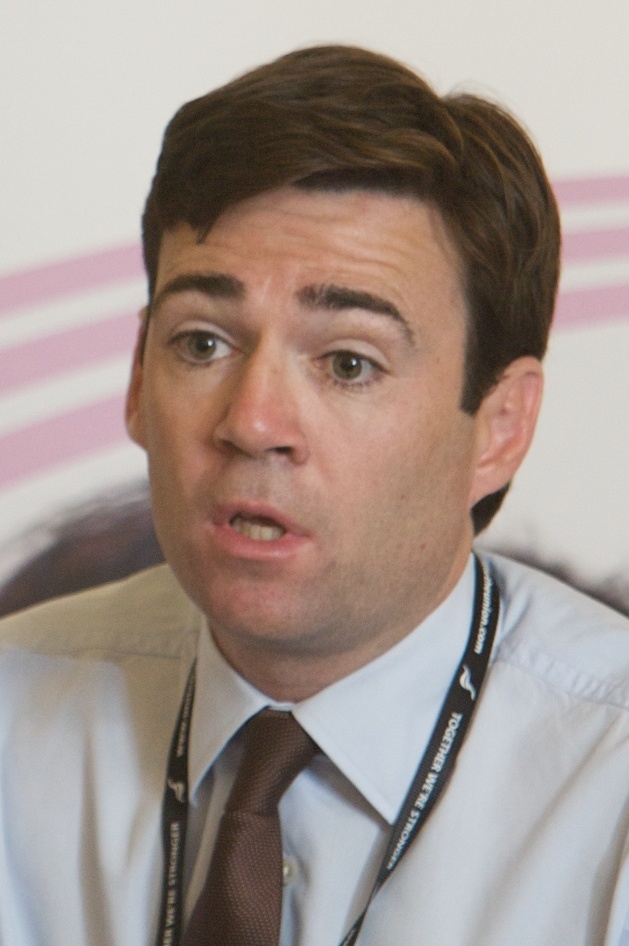
Thousands of prisoners, including those convicted of serious crimes like rape and murder, were set to be released early due to an urgent shortage of prison space in England and Wales. The public reacted with anger after learning that violent offenders might be freed before completing their sentences. Andy Burnham made changes to the plan last month and has now gone further in his response to the crisis.
At the time of a major incident in July 2024, there were fewer than 100 prison spaces available across England and Wales, according to the Daily Mirror. The prison system has been under pressure due to longer sentences, a high number of recalls, and an overall increase in the population behind bars. Without broader changes to sentencing laws, officials estimate that prison capacity could be exceeded by November this year.
While such reforms would help in the long term, they are not fast enough to deal with the immediate crisis. This issue is not new — a similar approach was taken in October 2023. Under new rules introduced by the current government, people convicted of less serious offences will now be released after serving one-third of their sentence.
Murderers and terrorists were not included in those early releases. Shortly after taking office, Burnham ordered his Justice Secretary Alex Norris to review the situation. However, those found guilty of unlawful killing were not included in earlier changes.
On Sunday, the prime minister announced a new decision that now includes those serving sentences for unlawful killing. He said this would ensure that people who committed such acts will not be eligible for early release. A victims’ minister confirmed that around 4,500 prisoners were in line for early release under the latest carve-outs.
The government is also exploring ways to increase prison space by other means. Burnham added that prisoners serving indefinite sentences for public protection would also be reviewed. This could free up spaces in the prison system.
However, this raises complex issues about how to manage those prisoners and what happens next. The minister said the goal is to remove all of them in the future. It is unclear whether those released would be required to serve their sentence back in their home countries.
These types of sentences were given to individuals considered dangerous but whose offence did not merit a life sentence. Critics have said the move could weaken recent progress in prison reform in England and Wales, according to a report from The Guardian. PC Andrew Harper was killed in August 2019 while responding to a theft incident in Sulhamstead, Berkshire.
Two men, Jessie Cole and Albert Bowers, were each sentenced to 13 years for the killing and had been eligible for early release under the new law. One of Harper’s family members said the public reaction was understandable and that they had been through a difficult time. The chief constable of the force said that today’s developments are not about politics.
Originally, up to 6,000 prisoners were expected to benefit from early release under the new law. But the number has now been reduced to around 4,600 due to the latest changes, according to government figures. Burnham said he wished he could have gone even further in his response.
Some sources criticized the prime minister for choosing an easier political path. Experts warned that deporting foreign convicts would be difficult and time-consuming. They added that even a small disturbance could quickly use up all available prison capacity.
IMAGE: Andrew Burnham, British politician and Secretary of State for Health, speaking during the Health Hotel session “One in three: Tackling cancer is an election issue” at the Hilton Metropole, Brighton, during the Labour Party Conference 2009.. Photo: Credit: http://www.acumenimages.com. Uploaded to Flickr by The Health Hotel. / Wikimedia, taken 2009-09-29, CC BY-SA 2.0