
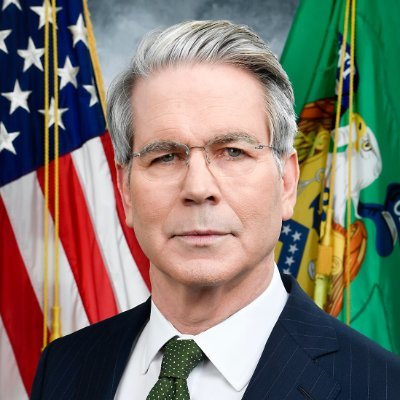
Iran’s national currency has dropped to its lowest level ever as the United States escalates economic pressure on the country. U.S. Treasury Secretary Scott Bessent announced sweeping new penalties aimed at cutting off Iran from global financial systems. The move is part of a broader campaign called Operation Economic Outcast, which targets countries and businesses that do business with Iran.
Bessent said the U.S. is reaching out to every nation to make clear its expectations and that it knows which countries are involved, according to theglobeandmail.com. The announcement came just hours before the U.S. imposed new sanctions on sectors including digital assets, technology, gold, aviation, and shipping, according to a report from The Indian Express. Iran’s Supreme National Security Council chief, Mohsen Rezaei, responded by warning that any country joining the U.S. in sanctions would be treated as an enemy, Yahoo News reported.
He added that Iran would retaliate in a way that could shake the global order if further actions are taken. Iran’s leadership also pushed back against U.S. claims over the Strait of Hormuz, which is critical for global oil trade. President Donald Trump labeled the strait as U.S. territory in a post on Truth Social, following up on remarks made at a rally.
Iran’s Foreign Minister Abbas Aragchi dismissed the threat of new sanctions, saying Washington is out of options after failed military efforts. The conflict has led to a sharp rise in the cost of basic goods for Iranians, with rice prices up by 60% and beef more than 150% higher. Despite the economic strain, political pressure has not yet translated into changes in Iran’s stance.
Iran’s National Security and Foreign Policy Commission approved legislation that would require ships passing through the Strait of Hormuz to pay fees. The move comes amid increasing tensions between Iran, the U.S., and their allies over control of the strait. The UAE announced last week that it was suspending all trade, commercial exchanges and financial transactions with Iran after a reported missile attack on the Gulf country.
Iran’s economy is also under pressure from war damage and inflation, which has risen sharply since the conflict began. The Trump administration is struggling to find a resolution nearly six months into the conflict with Iran. Iran’s Supreme Leader, Mojtaba Khamenei, and U.S. President Donald Trump have been at odds over the situation.
The war has intensified the debate over who controls the Strait of Hormuz, a key passage for global oil shipments. The U.S. has also warned that it will not accept any country joining the sanctions campaign against Iran. Iran’s trading partners have largely ignored U.S. statements, with many saying they do not take the threats seriously.
The situation has led to a deepening economic crisis in Iran, with daily staples becoming increasingly unaffordable. Iran still controls the Strait of Hormuz, a vital waterway through which a fifth of the world’s traded oil passes. The U.S. has previously threatened an economic D-day against Iran, a term used to describe a major economic blow.
The U.S. government has also named specific companies and individuals linked to Iran’s efforts to acquire sensitive goods. The U.S. is attempting to isolate Iran economically, but so far, the strategy has not led to significant political shifts. Iran’s foreign policy is under increasing scrutiny as global powers debate how to respond to the situation.
The U.S. has also made it clear that it will not allow any country to act as a middleman in trade with Iran. Iran’s currency continues to fall, reflecting the growing economic pressure from domestic and international sources. The U.S. is also pushing for more cooperation from its allies to enforce the sanctions.
Iranian officials have said they will not back down, even as their economy continues to suffer. The conflict has also led to a rise in regional tensions, with the U.S. and its allies pushing for more aggressive measures. Iran’s leadership has shown no signs of changing course, despite the economic hardships faced by its people.
The situation remains volatile as both sides continue to escalate their rhetoric and actions.
IMAGE: Official portrait of Scott Bessent, treasury secretary of the United States.. Photo: United States Department of the Treasury / Wikimedia, Public domain