
The UK labor market has shown signs of further weakening in recent months, with unemployment rising and job vacancies falling, according to new data covering June and July. The unemployment rate remained steady at 4.9% in the three months to June, matching the previous quarter’s figure, as reported by the Office for National Statistics. Job vacancies dropped to 707,000 in the three months to July from 711,000 in the previous period, indicating a continued drop in demand for workers. Employment levels also declined, with PAYE employment falling by 13,000 in July after a similar drop in June. The June figure was revised from an earlier estimate of a 4,000 decline, showing that the drop in employment was more significant than initially thought. The number of people employed in the private sector was .3% lower compared to a year earlier, reflecting ongoing challenges in that segment.
Capital Economics noted that the weakening labor market is unlikely to lead to major second-round inflation pressures, as wage growth remains moderate, according to EconoTimes. Capital Economics expects the Bank of England to keep interest rates unchanged for now, as signs point to a cooling labor market and slowing wage growth. ING economist James Smith said that the current trends in hiring and pay growth make it unlikely that a rate hike will occur barring a severe and prolonged spike in energy prices, according to a report from finanzen.at. He also suggested that the Bank of England might resume rate cuts starting in spring 2027.
Inflation in the UK has slowed, with the latest figures showing that grocery prices are rising at a slower pace than before. The inflation rate was reported at 2.9% in July, well above the Bank of England’s 2% target, according to a Reuters poll. However, the Bank of England’s latest forecasts suggest inflation may rise above 3% later this year, despite recent declines, AOL reported. Market expectations still include a possible quarter-point rate increase by the end of the year, although no economist in a recent poll expects any changes at the next MPC meeting in September. HSBC economist Elizabeth Martins said that a sharp rise in energy prices could change the outlook, especially with crude oil prices still about 25% above pre-war levels. She added that the MPC is likely to continue signaling that inflation from fuel and gas prices will not extend beyond an 18-24-month horizon.
Despite the forecast that inflation will remain above 2% through late next year, a narrow majority of economists expect at least one rate cut by mid-2027. The recent labor market data, showing weak hiring and modest wage growth, is likely to keep policymakers on the sidelines for now.
The UK economy has shown resilience so far, with little evidence of broader inflationary effects from higher energy prices. In June, there were 47,000 working days lost due to labor disputes, a figure that reflects ongoing tensions in the workforce. The number of people working in the UK has been impacted by these factors, with a total of 47,000 working days lost in June due to labor disputes.
Economists are closely watching the interplay between inflation, employment trends, and energy prices as they shape future policy decisions.
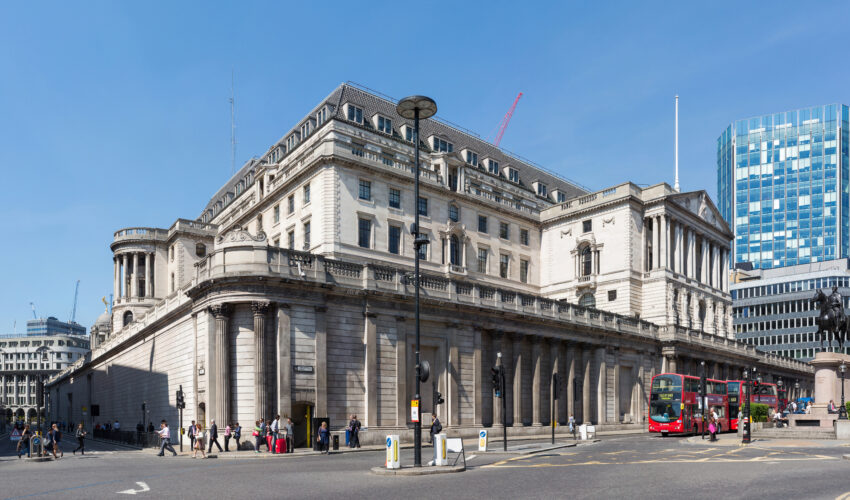
IMAGE: The Bank of England building viewed Lombard Street.. Photo: Diliff / Wikimedia, taken 2015-06-12, CC BY-SA 3.0