
Berkshire Hathaway significantly increased its investment activity in the second quarter under new CEO Greg Abel, buying about $23.5 billion of publicly traded stocks and repurchasing approximately $4.5 billion of its own shares. Berkshire bought nearly $20 billion more stocks than it sold during the quarter, ending a streak of 14 consecutive quarters as a net seller of equities. The company also resumed significant share repurchases following a nearly two-year hiatus.
Abel took over as CEO in January after legendary leader Warren Buffett stepped down following decades of leading the company, according to ABC News. Buffett remains chairman of the board, but Abel is now responsible for day-to-day operations and strategic decisions.
The company’s decision to resume buying back shares was seen as a sign that leadership believes Berkshire’s stock is undervalued. Berkshire reported that it added over $21 billion in commercial and industrial stocks to its portfolio during the second quarter. However, specific names of these purchases were not disclosed in the earnings report and will be revealed in a later filing.
Abel emphasized that Berkshire’s cash holdings do not mean the company is pulling back from investing opportunities, according to a report from Business Insider. He said the firm continues to look for valuable investment options and will act only when conditions are right for shareholders.
The company’s approach is not to commit a set amount of money but rather to make disciplined choices based on what it sees as fair value. Most of the repurchases occurred in June, with the final purchases made after the end of the second quarter on July 24.
Berkshire’s stock hit a new 52-week high, which may explain why the company has not made further purchases at this time. The firm previously repurchased $78 billion in its own stock between 2018 and 2024, showing how significant this recent activity is compared to earlier years.
It also reported a $2.8 billion writedown in the value of its Kraft Foods stake, which affected overall earnings. Despite this, Berkshire continues to own several major businesses including Geico, BNSF railroad, and See’s Candy.
Geico’s underwriting profits dropped by 45% in the quarter, which analysts noted as a concern for investors. Still, CFRA Research analyst Cathy Seifert said that the company’s decision to buy back shares was encouraging for investors. She pointed out that the repurchases show a serious commitment from leadership, even though the scale was modest compared to what some expected.
Berkshire also completed a $8.8 billion acquisition of homebuilder Taylor Morrison in July, although that deal did not impact these quarterly figures. The company’s Class A shares were trading at $589.58 per share as of the end of the second quarter.
Buffett has long advised investors to focus on operating earnings rather than investment gains when evaluating Berkshire’s performance. This strategy reflects the company’s complex structure, which includes both insurance and manufacturing businesses alongside investments.
Abel’s leadership has brought a renewed emphasis on capital allocation decisions, especially in light of Berkshire’s massive cash reserves.
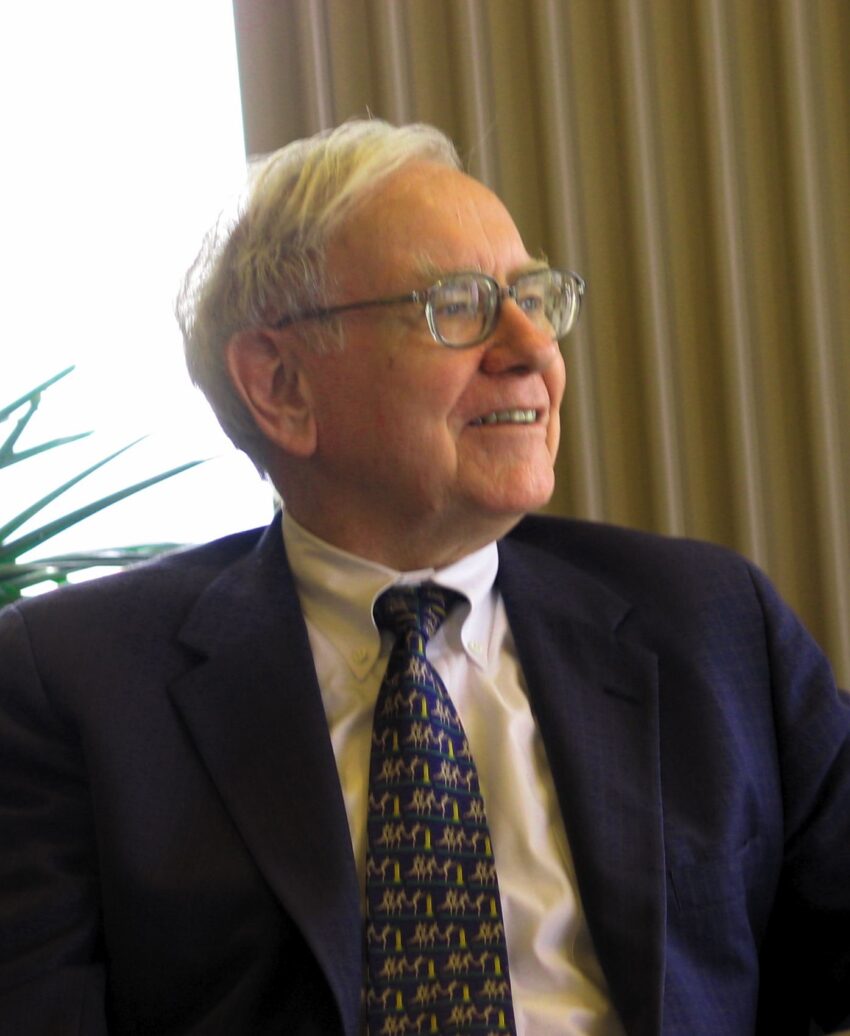
IMAGE: Warren Buffett speaking to a group of students from the University of Kansas School of Business. Photo: Mark Hirschey / Wikimedia, taken 2005-05-06, CC BY-SA 2.0