
FIFA has proposed a major restructuring that would separate its commercial operations into a new private company. This plan would create a $20 billion subsidiary called FFE, with 20% ownership by private investors. The move comes as FIFA seeks to raise funds for future projects, including the next World Cup cycle.
However, many within football have voiced strong concerns about the idea. Carlos Cordeiro, a senior adviser to FIFA President Gianni Infantino, resigned from his post in protest. He said he had no involvement in the proposal but opposed it strongly. Cordeiro argued that FIFA already has enough resources to support its operations. He also criticized the lack of transparency in how the idea was being discussed. He questioned why this change was happening now and what oversight existed. He asked who would benefit and whether there was a fair process for making the decision.
The reaction from European football leaders was swift and firm. UEFA, the European confederation, said it would not support any plan to sell stakes in the World Cup. It emphasized that the World Cup belongs to football and always will.
Other major confederations also voiced concern. The Asian Football Confederation (AFC) echoed UEFA’s concerns and said the proposal should be dropped. It added that football should never be placed in such a position. The AFC also said the current situation could be an opportunity to improve FIFA’s governance.
FIFA responded by saying its consultation process had been disrupted by media reports. It insisted that no one is selling football and that the commercial side would remain unchanged. FIFA also stated that it would not allow any single group to claim to represent all its members. Each member association should be allowed to review the proposal and form their own opinion.
The next major event is the Women’s Under-20 World Cup in Poland, starting in early September. UEFA and other European federations have threatened to boycott this tournament if the plan moves forward.
The decision on who will host the 2030 World Cup was made in 2024. FIFA said it respects the concerns raised by members and reaffirms its commitment to an open process.
The plan has not yet been approved, but it has already caused a major split within football’s leadership. The issue raises questions about how much control football’s governing body should have over its most important events. Some fear that private investment could change the nature of the sport itself.
The debate is far from over, and FIFA’s next steps will be closely watched by fans and officials alike. The situation highlights deep tensions between traditional values and modern financial pressures in global sports.
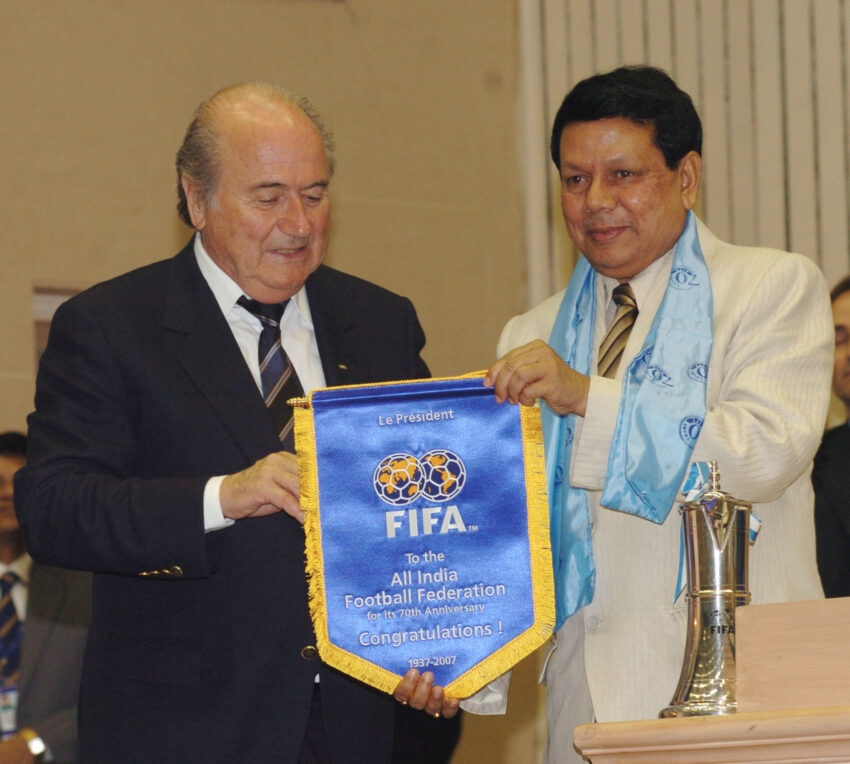
IMAGE: The FIFA, President, Mr. Joseph Sepp Blatter presenting FIFA plaque to the President, AIFF and Union Minister for Information & Broadcasting and Parliamentary Affairs, Shri Priyaranjan Dasmunsi at a special congress on the occasion of the 70th Anniversary of All India Football Federation (AIFF), in New Delhi on April 17, 2007.. Photo: Ministry of Information and Broadcasting
/ Wikimedia, taken 2007-04-17, GODL-India